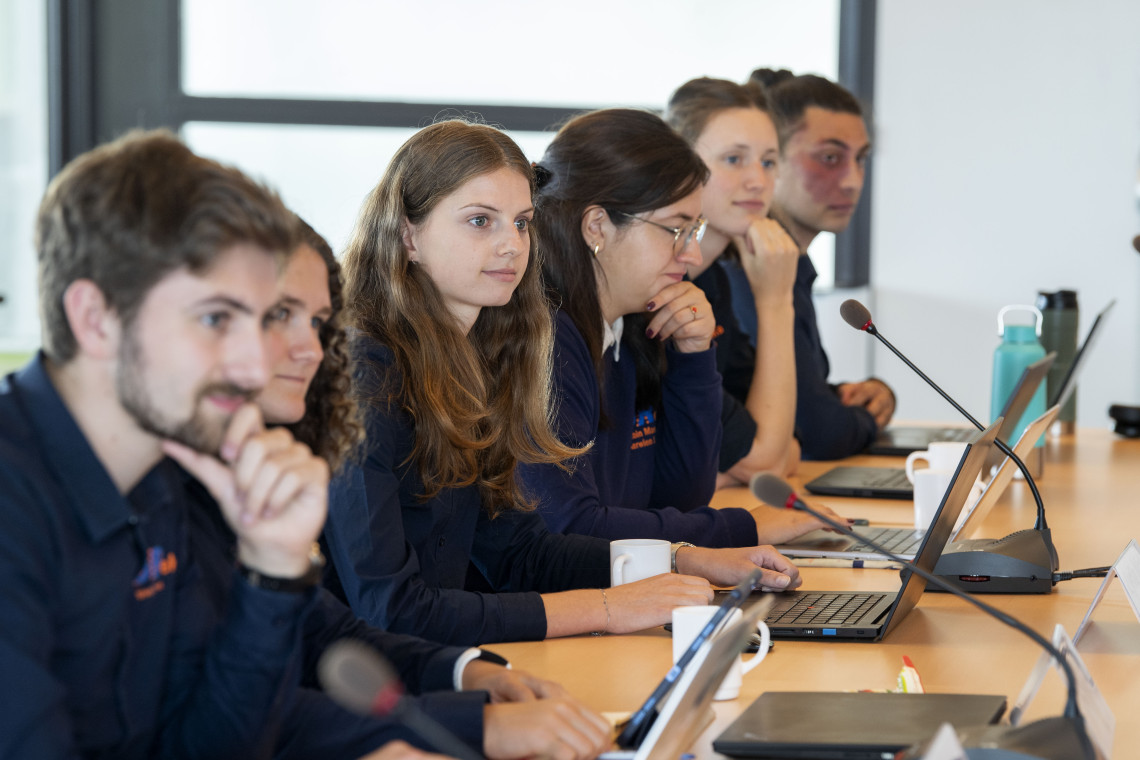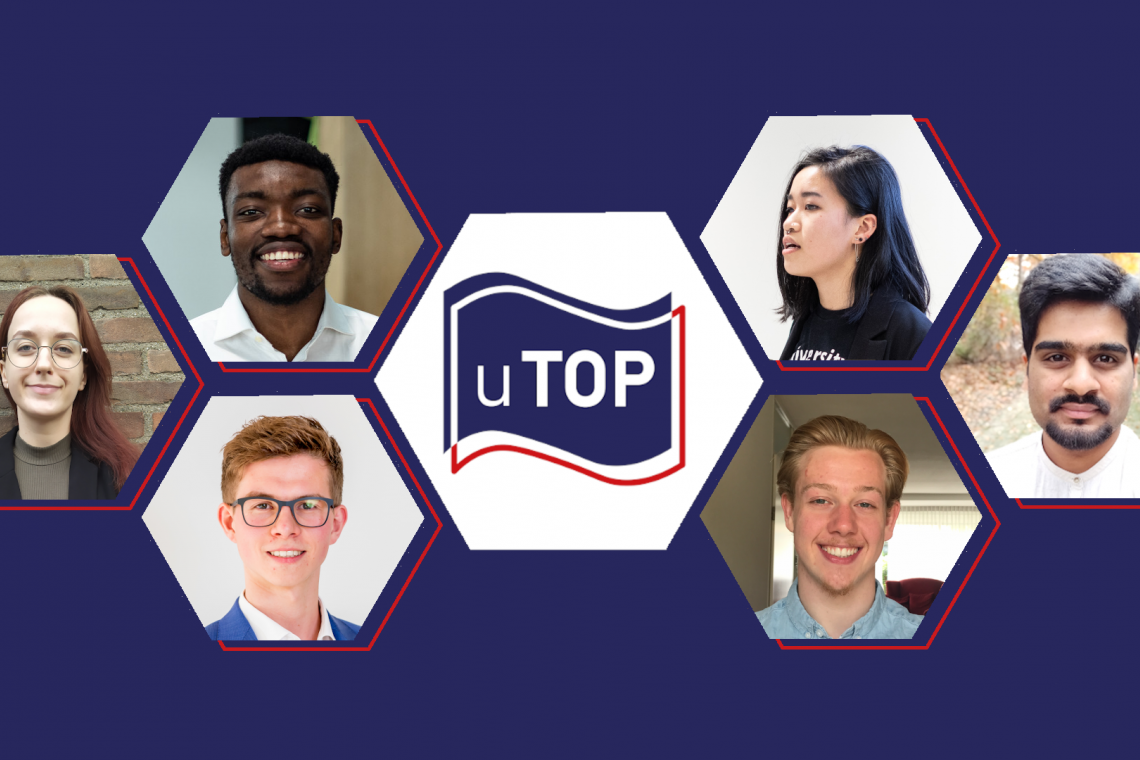


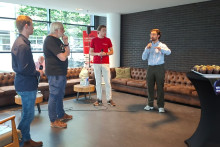
Around 25 spectators attended the participation election debate between De Ambitieuze Student (DAS), UReka, and newcomer Studentenpartij Twente (SPT). The fairly decent turnout may have been partly due to the free muffins being handed out. University Council chair Herbert Wormeester moderated the debate, but also frequently took the floor himself.
Credits for activism
UReka kicked things off with a proposal to award study credits for student activism. According to party leader Tjerk Zweers, a board year offers many benefits that will serve you well for the rest of your life. He mentioned communication skills in difficult situations, among other things. Wormeester jokingly asked whether Zweers was particularly keen on difficult situations. Marius Busscher wondered aloud what this would look like in practice.
Affordable food on campus
Busscher then referred to his party’s ten-point plan and repeated several positions, including on the price of food on campus. He wanted to bring food services back under the UT banner and pointed out that the contract with the current provider is due to expire soon. DAS number two Adieb Hanifi asked him how he intended to arrange that, to which Busschers replied that he would first have to be elected. It was the only time the students asked each other for further explanation, or when anything resembling a debate emerged.
Teaching assistants
Hanifi, in turn, introduced the topic of Teaching Assistants (TAs). According to him, they are indispensable in reducing the workload of professors and thereby improving the quality of teaching. According to DAS, TAs were also the answer to a question from the audience about how attention was being paid to the wellbeing of staff and students. Wormeester tempered the enthusiasm for TAs and warned against an ‘army of assistants’, while lecture halls remain empty.
Binding Study Advice
UReka shifted the conversation to the Binding Study Advice. According to Zweers, it should be investigated what its benefits are and whether UT might be better off without it. Wormeester pressed him on what UReka’s solution might be for long-term students who could result from abolishing the BSA. Zweers proposed a study limit of a maximum of ten years. DAS suggested moving the BSA to the second year. Busschers of the Student Party Twente was satisfied with the BSA. According to him, it should not become too easy, and students should be expected to make an effort.
A spectator asked about UT’s low ranking. Wormeester also stepped in there. He explained that rankings are mainly based on research output, not on the quality of education. Still, Wormeester had to acknowledge that rankings do play a role in students’ decisions on whether or not to choose UT.
Internationalisation
Hanifi of DAS brought up the benefits and necessity of internationalisation. According to him, UT needs more international students, and it is beneficial for UT if the institution has many international collaborations. Wormeester indicated that there was still some room for manoeuvre, because the government wants to limit intake on the one hand, but also stresses the importance of the BEETHOVEN programme on the other. According to Zweers of UReka, student parties do have some influence on the ministry. Lobbying is still ongoing. Busschers of SPT felt that UT was not international enough yet. He equated internationalisation with speaking English.
Accessible
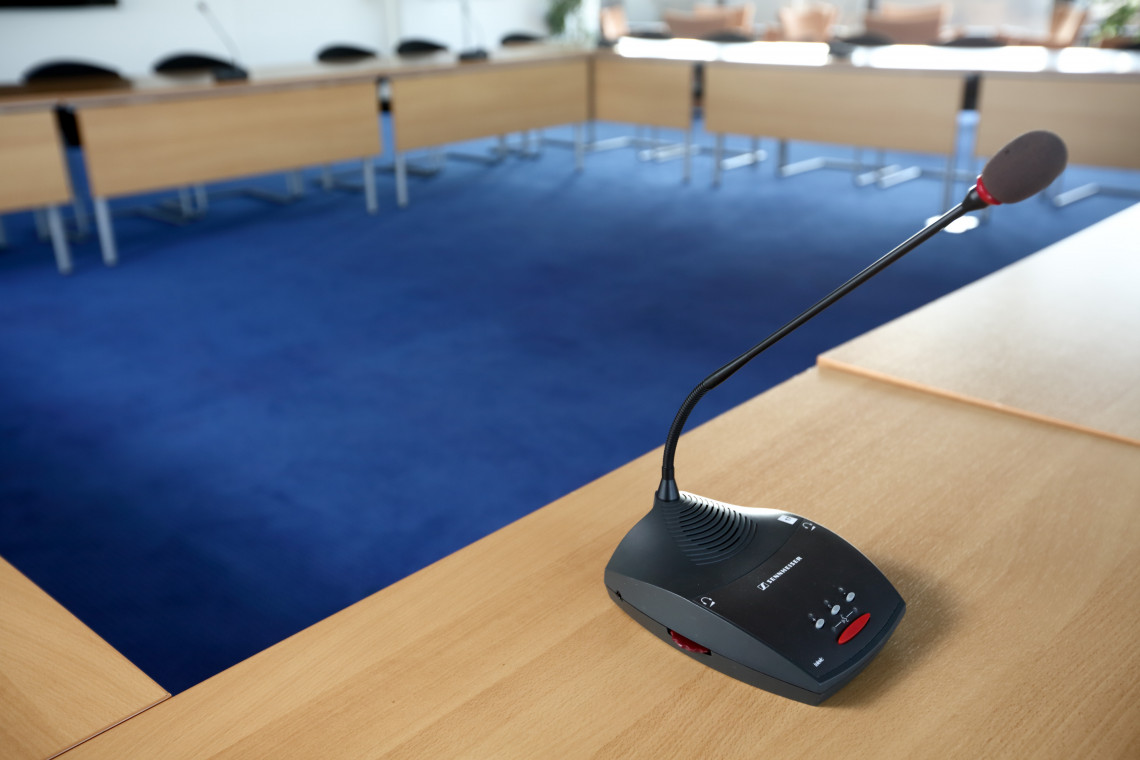
Although the location was easily accessible, it also immediately became a source of distraction because of students walking in and out. On top of that, not everyone used a microphone or spoke into it clearly. Questions from the audience were also asked without amplification.
It could hardly be called a debate. It was mainly a list of positions that no one could really disagree with. The speakers acknowledged this too: ‘Ultimately, we are all students and we share many ideals.’
Participation elections
The participation elections are being held this week. Voting is open until 18 June. The results will follow on Friday 19 June, when it will be announced who will represent the parties on the blue plush seats of the University Council.