

What needs to change at UT, and why?
‘A voter turnout of only around thirty percent is actually quite embarrassing. How representative is that, really? That is why we actively approach fellow students and staff members to find out what they care about and encourage them to vote in the first place.
The first thing we want to tackle is the food in the canteens. At the moment, that is still managed by an external provider, but that contract will eventually expire. We want to bring it back under university management. That could reduce costs and immediately create student jobs. We spent some time observing the situation and noticed that the people eating there are mainly UT staff. For students, it is barely affordable.
We would also like to see an additional supermarket on campus. Right now, there is effectively a monopoly, which leads to relatively high prices. We have all facilities within walking distance, yet most students do their grocery shopping off campus. There is the old Starbucks location, for example. That could easily accommodate a grab-and-go concept or something similar. Let them compete for a change.
Another thing: students are currently sitting on the grass around the Drienerlo clock tower, and that should also be possible at O&O Square. As far as I am concerned, that area could be a lot greener. At the moment, it feels grey and rather bleak, especially during the winter months.’
What is UT doing well?
‘The atmosphere is the first thing you notice when you arrive on campus. It feels like a village: friendly, green, and close-knit. That is a real advantage compared to other universities. Everything is nearby. Your friends live five metres away, and the university buildings are only a two-minute walk. That sense of community is something we should invest in and preserve.’
How are you different from the other two parties?
‘The established parties keep talking in abstract terms without coming up with concrete action points. Based on conversations with engaged fellow students, we have developed a ten-point plan, which can be found on our new website.
We also intend to make active use of our right of initiative. Council members can submit their own proposals and motions, and we will definitely do that. We are not going to sit back and wait. We want to actively work on the issues we believe need to change.
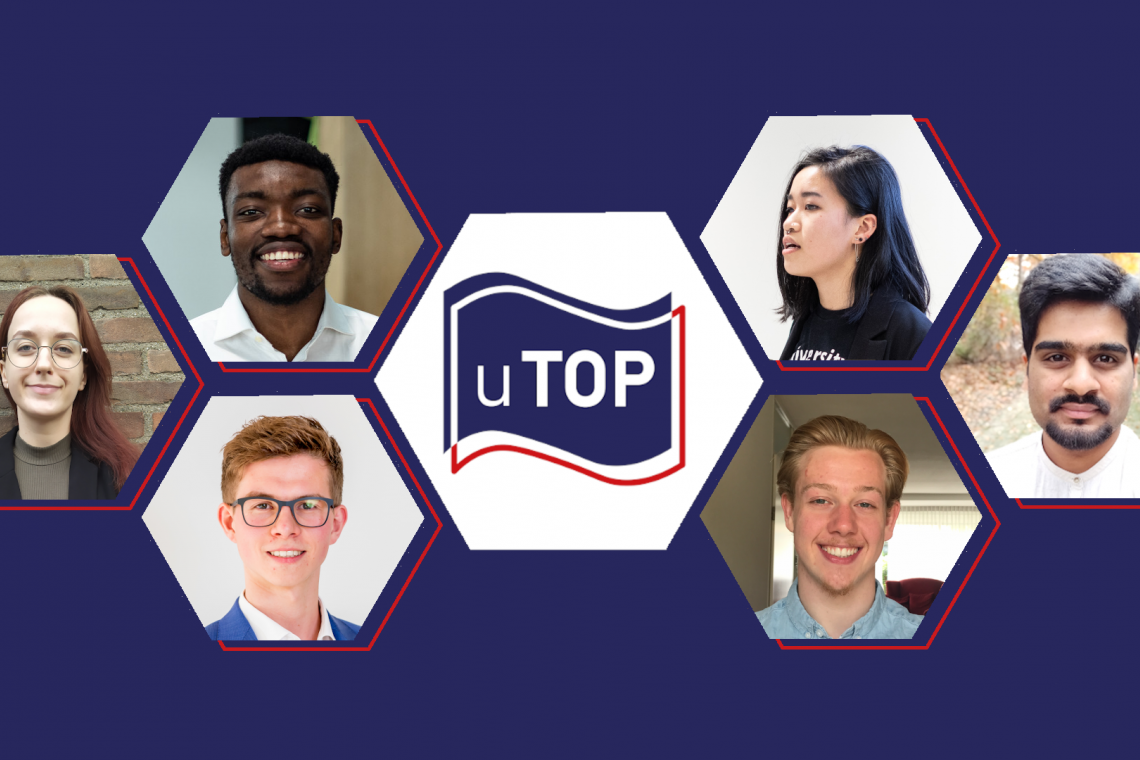
Another thing we have noticed is that the University Council is still largely a Dutch affair. International students are barely aware that it exists and are therefore not very involved. Our number two candidate, Mohamed Elshinawy from Egypt, wants to change that.’
What will your campaign look like?
‘Of course, we are doing the usual things, such as handing out flyers and putting up posters, but our budget is still quite limited.
What stands out is that many students do not even know there is a representative council or that they have a vote. International students, in particular, are barely reached. That is why we spend a lot of time talking to people. We do not want to make things up ourselves. We want to come up with genuine improvements that matter to the UT community.
The established parties rely on a fixed group of supporters who vote more out of loyalty than genuine engagement. The figures reflect that. As a result, a large part of our campaign consists of talking to both students and staff.’
Interviews with lead candidates
This is the second interview in a series in which U-Today will speak to the lead candidates for the University Council elections over the coming weeks. Voting will take place from Monday 15 June until Friday 19 June. The election results will be announced on the Friday afternoon.