

‘The absence of evidence is not evidence of absence,’ the university council said recently during the council meeting in which the issue was raised. In other words, the fact that there are not many reports of conflicts and inappropriate behaviour does not mean that it does not occur. The council indicated that they regularly sensed within the organisation that something is wrong. Unfortunately, they 'never see it reflected in official reports, and felt a lack of urgency.'
Furthermore, the council believes that the support structure — the network of advisers and confidential counsellors at UT — is not easy to find. The measures taken by the executive board to improve this have not yet led to a greater sense of safety, they stated.
Privacy
Former executive board president Vinod Subramaniam responded unusually sharply at the time. ‘That we do not share anything about it says nothing at all about how much this concerns us. For the sake of the privacy of those involved, we simply cannot share everything with you, especially not about ongoing cases.’
Rector Tom Veldkamp responded emotionally: ‘Before problems reach us as a board, they have often been going on for years and have completely stalled. You have no idea how much we struggle with this.’
Reports increased
Ombuds officer Han Warmelink sees an increase in the number of reports, but he doesn’t think that this is a sign that things are getting worse. ‘When I started here, I received around 40 reports per year, and that has now risen to about 60. That may mean that people are better able to find the reporting channels, not necessarily that the number of issues has increased.’
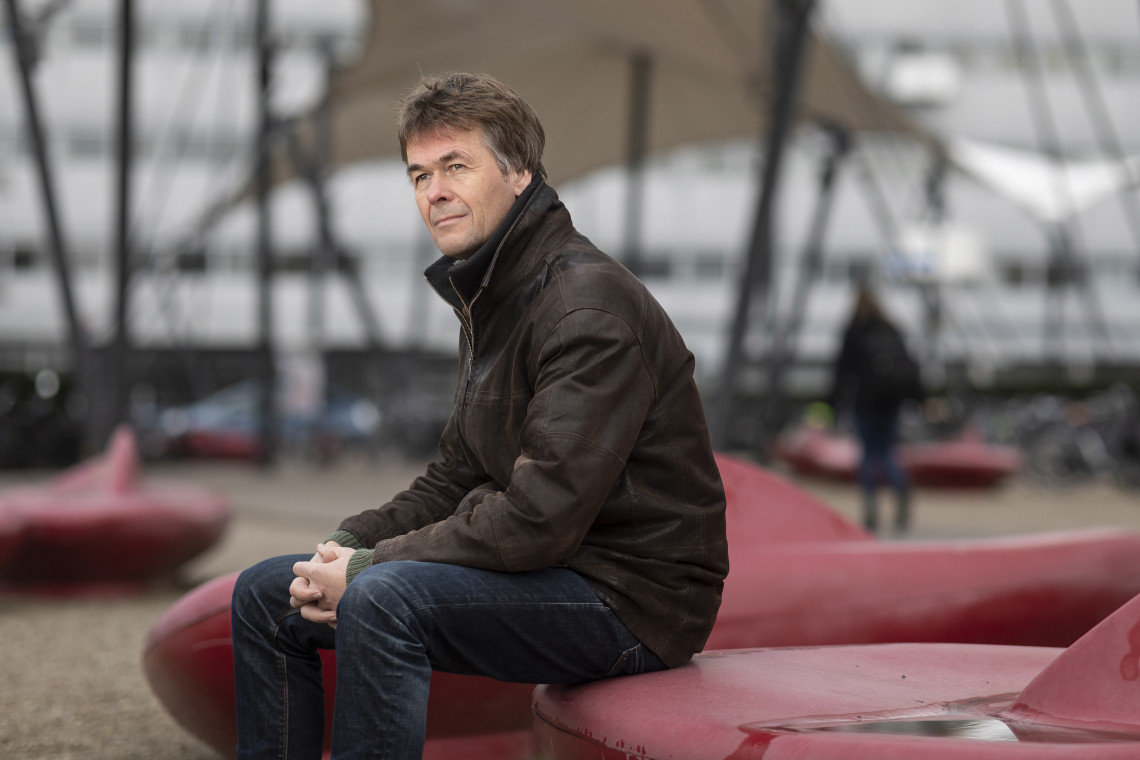
Ombuds officer Han Warmelink.
Warmelink estimates that he usually resolves around 70 percent of the problems brought to him by facilitating dialogue. ‘Another 15 percent of conflicts are resolved because, for example, someone leaves the organisation. The remaining 15 percent unfortunately remain unresolved.’
According to him, people who are involved in a conflict might be discouraged from reporting it, if they know their case will ultimately be reflected in a report.
Perception
Integral safety Manager Erwin Medendorp shows understanding for the concerns of the council. ‘I can well imagine that they think nothing is happening, but that is a matter of perception. It has our full attention. That we do not communicate about it does not mean we are not doing anything. Every incident is one too many. However, by law we are limited in how much we can share.’
Ombudsman Warmelink would like to see lessons drawn from incidents. ‘For example, I would welcome an integral investigation team. There are many highly capable people working at UT, including experts in this field. Let them jointly investigate where things go wrong and what we can do about it. Learning from mistakes and taking action.’
Human factor
Medendorp believes there is a difference in views on what helps. ‘Behaviour cannot always be captured in procedures and protocols. Every situation is different, and there is not always a ready-made solution. Sometimes it is also about perception: something can be interpreted very differently from how it was intended. It remains human work.’
According to him, it is a human tendency to focus on the negative. He points to figures from a UT wellbeing survey, which show that 90 percent of respondents indicated they go to work with great pleasure. ‘That does not, of course, take away from the fact that the remaining ten per cent may be having a very difficult time. That is true.’
Digital referral tool
Medendorp adds that a digital tool is currently being made, which should quickly direct people with a complaint or problem to the appropriate support service within UT. It is expected to be ready towards the end of the academic year.
Nevertheless, he believes that responsibility should not solely lie with the victim to report issues. ‘We must all work towards a culture in which it is acceptable to address one another. Leaders must also be open to criticism. There is still a considerable task ahead.’
Training and cultural change
With that, he echoes Subramaniam’s point during the council meeting. Subramaniam expressed hope for a cultural change in which people address one another sooner, to prevent escalation, and to ‘nip conflicts in the bud’. He also expressed the wish that leaders within the organisation would be willing to follow management training.
Medendorp refers to the currently widely discussed inaugural lecture by professor Maaike Endedijk: ‘It only takes one person to stand behind you and fight for you when you can no longer do so yourself. One person who says: I do not accept this. I fully agree with that: look out for one another.’