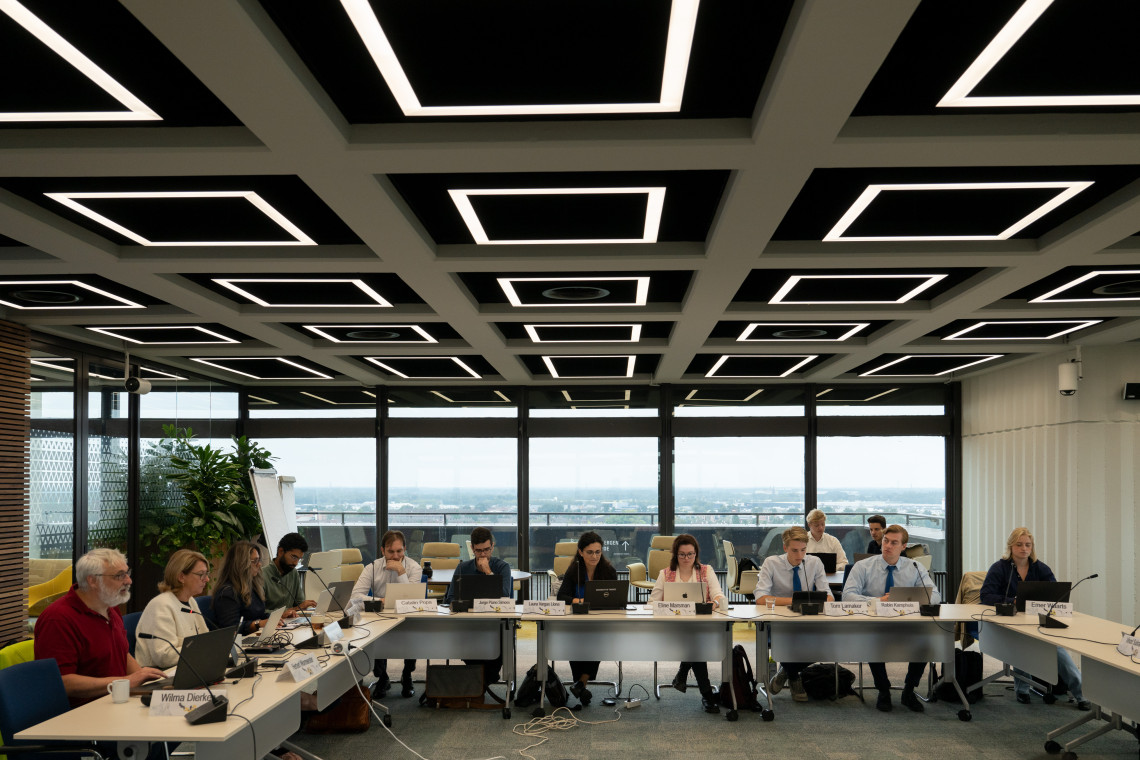


University Council chairman Herbert Wormeester raised the subject. 'As it is described in the article: a culture of fear, excessive publication pressure, limited intervention from the university... I have to say that the article dampened the holiday spirit we were already in at that time. This was a shock, even if you look at the reactions.'
Wormeester did not want to address the specific case. The important questions now are: could it come to that again today? And what instruments do we have to prevent such situations in the future?'
Culture change
According to President of the Executive Board Vinod Subramaniam, it is a matter of a culture change. 'We were just talking about the institutional plan, about creating a culture in which people speak out when they are confronted with undesirable behaviour. That's what we want to achieve. We can never guarantee one hundred percent that there are no excesses, which is why we have to respond alertly to signals. We need to have a culture in which we have conversations about undesirable behaviour and the boundaries we set with each other.'
Subramaniam said that he himself had acted in the case of 'Professor M.', by starting an investigation (carried out by detective agency Hoffmann, ed.). Nevertheless, he does speak of a dilemma. 'As this university’s administration, we try to be proactive. But as an Executive Board you often only receive a signal at a late stage, so you can almost only be reactive. In the end, it is all about taking action in the event of a signal. And – if necessary – to intervene. This can be in the form of a conversation, an investigation, or an HR intervention, for example. But it starts, especially as a leader, with being alert and recognizing signals.'
Scepticism
Wormeester responded that he does sense some scepticism in the workplace. 'Whether HR actually takes action, for example. And are managers within faculties and services able to act? How can we ensure that there is trust in people, that there is a system that works for them, rather than against them?'
Executive Board Vice-President Machteld Roos did not answer that question, but insisted on having the proper conversations. 'Our leaders must stand up for the safety of the university and its community. We try to make sure they have the right resources to engage in conversations with their teams. We ask people to speak out, but we also have to make sure that we listen actively.'
Ombuds officer
Rector Tom Veldkamp concluded by pointing to the role of ombuds officer Han Warmelink. 'If people feel unsafe, they can knock on his door. He can take on the role of mediator before a situation escalates. Often this escalation is already the case the moment we as an Executive Board receive a signal. The sooner something is expressed, the greater the chance that a problem will be solved.'
About the article
U-Today published a reconstruction last December. It is about a culture of fear, manipulative behaviour, accumulation of work pressure and exploitation of PhD candidates by 'Professor M.' (anonymised). Whistleblowers also questioned the professor's academic integrity.