

The track record of UT professor – referred to here as M. – is impressive. For years, he’s been a top earner for the University of Twente, with major national and international grants. But that paper reality does not match the daily one. Over the course of a year, U-Today spoke to multiple insiders and whistleblowers, whose names have been anonymized for this article. The editorial team also reviewed correspondence and documents, and from testimonies and documentation discerned a pattern of structural transgressive behaviour, suppression of PhD candidates in particular, and concerns about academic integrity.
In brief: this article in one minute
- Whistleblowers describe how a UT professor suppressed PhD students for years.
- Mainly due to an obsession with publications, they say, ‘so that he appears to the outside world as a successful academic’.
- Problems were raised within the research group several times. Repercussions were limited to an external consultant who advised for a few months on ‘organisational issues’.
- Insiders wrote in a letter about ‘a lack of professional and technical guidance, passive-aggressive emails, anger outbursts during meetings, violation of personal space, a hostile environment, and colleagues struggling with insomnia, panic attacks, and suicidal thoughts’.
- In 2024, some decided enough was enough and approached Executive Board president Vinod Subramaniam. An investigation by detective agency Hoffmann followed.
- The professor eventually entered a remediation process and engaged in self-reflection, according to his lawyer. The dean and president say they are ‘satisfied’ with the progress (see rebuttal at the end of the article).
- The professor himself confirms via his lawyer that there were signals about workload and stress, but denies manipulative behaviour or (academic) misconduct.
‘A master manipulator’
‘We are talking about a master manipulator. Someone who divides and conquers, exploiting his leadership at the expense of those beneath him. That’s how he became a professor. He coerces, manipulates, and intimidates everyone under him to fulfil his needs. Those needs are mainly research grants – to secure funding and publish papers, so that he appears to the outside world as a successful academic.’
These are the words of whistleblower Andreas Lindberg, who contacted U-Today in autumn of 2024. A few months earlier, he and several (former) colleagues approached Executive Board president Vinod Subramaniam, prompting an internal investigation. Warnings had already been raised years earlier within the department, to the dean and former rector. Serious repercussions, however, never followed after years of the same modus operandi.
First signals
How did it all begin?
As early as February 2018, several PhD students from the group approached then Twente Graduate School director Paul van Dijk. They noted that the professor’s demands and expectations did not align with the rules and guidelines in the so-called doctoral charter. For example, according to the professor, they were required to have at least four scientific publications to their name, one of which before the so-called qualifier – an interim assessment after about six months. He also allegedly told them they did not need to earn 30 ECTS through courses, even though that requirement is clearly stated in the charter. When the PhDs pointed out the actual rules, M. was reportedly ‘furious that we had looked up this information behind his back’.
'I often felt the focus on publications within the group was excessive'
Another serious signal came in an email dated 9 October 2018. It was from a postdoc resigning early, addressed to the professor and the group. He initially raised concerns about physical safety in the lab after a severe fire, but also flagged issues with group management and an unsafe environment. ‘I often felt the focus on publications within the group was excessive, to the point where it sometimes obstructed the true drivers of research,’ the email read.
He also cited studies on workload: ‘Many principal investigators use their position to exert unreasonable pressure on their PhDs, exploiting the fact that they will not abandon their PhD unless absolutely necessary. I feel some group members show symptoms of stress and anxiety.’ (…) ‘Some students regularly work outside office hours, which I believe leads to sleep disorders and other problems.’ (…) ‘I decided to share my thoughts with the whole group solely to encourage an honest discussion.’
Like boiling a frog
Concerns about physical safety were overshadowed by concerns about social safety – especially for PhD students. U-Today reviewed correspondence between the professor and PhDs. There were cases of pressure to work during weekends, unrealistic deadlines, belittling, controlling and manipulating individuals or their colleagues, downplaying workload, and pitting colleagues against each other.
There were also face-to-face conversations that crossed boundaries in tone, says whistleblower Lindberg. ‘His approach is like boiling a frog. It starts with a side remark – in my case about my haircut. He said it looked unprofessional. If you swallow that, he knows he can go further next time to cut you down. It’s bullying. You don’t expect that from your supervisor. You expect support, constructive criticism, guidance, and leadership. I never experienced any of that under his supervision.’
Other former researchers share similar experiences. ‘He pushed people. He tried with me too, but I don’t get knocked down easily,’ says former PhD student Camille Dubois. Still, there were incidents that crossed the line. ‘I remember a late Saturday night meeting scheduled with an external scientist for Sunday morning at eight. I had other commitments that morning, but was then berated for being unprofessional.’ Dubois also recalls odd personal questions: ‘When I shaved my beard, he asked if my father had a lot of facial hair. When I said yes, he suggested he might not be my real father.’
'I eventually realised he would only use me for his personal gain and then throw me out of academia'- Chen Rong
Dubois confirms: ‘He kept pushing further each time. If he knows you won’t push back, he’ll go even further next time.’ That image resonates with another whistleblower, Chen Rong: ‘There was a lot of transgressive behaviour in the form of aggressive emails and messages imposing unreasonable deadlines. Not all communication was black and white, but I eventually realised he would only use me for his personal gain and then throw me out of academia. That was the environment: the sole expectation was to churn out papers quickly and then leave to make room for the next. Parasitic behaviour, that’s how I’d describe it.’
Publication obsession
The professor’s obsession with publications grew more intense over the years. ‘Of the grants he won, I wrote about eighty percent,’ says Rong. ‘You’d be shocked how much plagiarism there was – though plagiarism isn’t even the right word. He simply had others write research proposals for him.’ Colleagues confirm the pattern: ‘His name had to appear on publications where he made no intellectual contribution,’ says Lindberg. ‘That was a very standard practice.’
The group’s focus was on quantity, not quality. Former staff member Diego Castillo explains: ‘We had a fairly distant relationship. I never felt the heavy pressure others did, though I did receive emails outside office hours. But there’s a big difference between my experience and what I heard from others. He goes as far as you let him. What struck me was his preference for quantity over quality. He wanted results and publications; I wanted relevant results. He didn’t seem interested in the research itself – it was all about securing the next grant.’
'The crazy thing is, I have to admit his system – in its own sick way – works'- Camille Dubois
Dubois confirms that picture: ‘When you run an experiment, you want reproducible outcomes – a certain level of certainty. Like when you drive a car, you expect the brakes to work ten out of ten times, not nine. In our case, we could only show the desired result in one out of a hundred attempts. His message was: this works, you have proof, write a paper and publish it. Such publications were borderline lying. The next step would be even harder – maybe one in a thousand attempts. You build an increasingly shaky house of cards. The crazy thing is, I have to admit his system – in its own sick way – works. That’s the most discouraging part. He gets his grants, he gets his papers published. Google him and he looks like a highly respectable professor. But behind that façade lies a very different reality.’
Questions about scientific integrity arose in several cases: a friend of a PhD writing an article without authorship credit; someone asked to plot data for a thesis. Another case: a WhatsApp exchange (seen by the editorial team) where a PhD admits the professor sent him another researcher’s TURBO grant proposal (a UT–Radboudumc programme) and asking to revise it. ‘So what [M.] did… He shamelessly sent me [person]’s proposal, and told me to write a better one… xD.’
M. denies this via his lawyer, a version confirmed by the dean: ‘In 2021, two researchers independently developed TURBO proposals on unrelated topics. One asked for advice on structure. For training purposes, the other’s draft was shared solely to demonstrate formatting. There was no overlap in scientific content. M. never instructed anyone to copy or reuse another researcher’s idea.’
A closed environment
Insiders also noted the group’s insularity over the years: a culture of us-versus-them. Collaborations within UT – even with colleagues down the hall – were actively discouraged. Attendance at conferences was barely promoted. Several insiders questioned whether the professor had sufficient understanding of the matter and technical expertise. Feedback focused mainly on form, not content.
‘Maybe he’s an expert in his earlier field, but the research shifted direction. It seems he lacks the necessary background or knowledge,’ says Castillo. ‘No, I can’t recall ever receiving good technical support,’ adds Dubois. How did he still manage to secure grants regularly? ‘Of course, he had to defend proposals in interviews with committees. Often someone else was present,’ says Rong. ‘When he truly had to stand alone, reputation was enough for a committee to give in. We had already done the groundwork.’
Multiple complaints and a suicide
It’s not that no one raised the alarm. In June 2019, an anonymous email was sent to, among others, then rector magnificus Thom Palstra. A meeting with HR followed, then an investigation to ‘advise on some organisational issues’. An external consultant joined the group for three months. For many, the boiling point had already been reached, partly due to an aggressive PhD who threatened legal action at the slightest provocation, mistreated students, and misjudged their work.
On 15 October 2019, another email went to the (former) dean with a disturbing message: ‘M. has become an undeniable master of psychological abuse. We are locked in a war of attrition – a struggle that has pushed some of us to the limits of our mental and physical wellbeing.’ What followed was a long list: ‘Lack of professional and technical guidance, passive-aggressive emails, angry outbursts during meetings, violation of personal space, a hostile environment, and colleagues suffering from insomnia and panic attacks’. And – as the email stated: ‘One person even considered suicide.’
The unthinkable happened. Early 2020, PhD candidate Henrique Oliveira took his own life. The professor was named in the – admittedly incoherent – message Oliveira left half an hour before his decision. M. later visited the apartment to collect clothes for the cremation. But according to Lindberg, he also searched for more information. When asked about possible consequences, M. allegedly brushed it off: ‘This university can only fire me if I rape someone.’
The suicide did seem to have awakened something in him. The following years saw a milder atmosphere, says Rong. Still, incidents continued, and several staff left early out of dissatisfaction.
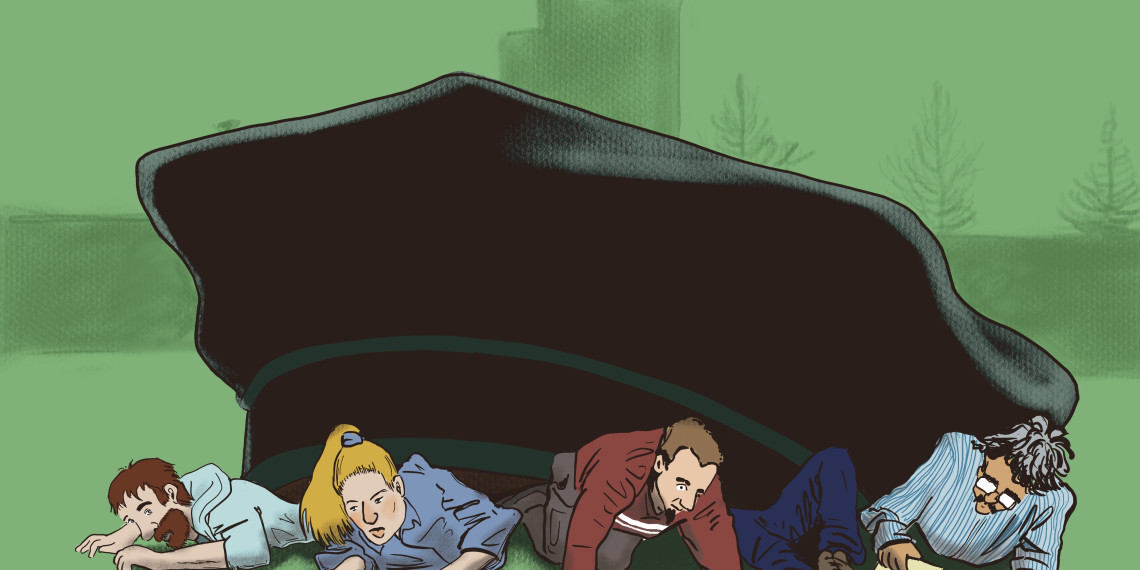
(Text continues after the illustration.)

Another investigation
After years of trying to limit the damage for colleagues, Lindberg decided in June 2024 that enough was enough. He and several (former) colleagues approached Subramaniam, who concluded the matter needed full investigation. Hoffmann, an external detective agency, conducted the investigation in the following months. The agency interviewed multiple parties, while M. was allowed on campus only occasionally and was not given a contact ban. The investigation was handled at department level, not by the Executive Board.
According to insiders, that process went wrong on several fronts. M. allegedly sought contact multiple times. Notably, after being informed by the dean and HR that he could no longer supervise PhDs, his contact with them reportedly increased. Whether due to pressure, fear, manipulation, or a loyalty conflict likely varied per person. The initial decision – that M. could no longer supervise PhDs – was later partly reversed, at the ‘urgent, personal request of the PhD students’. The new sanction: M. may no longer act as primary supervisor, but can still serve as co-supervisor. He was also forbidden from sending emails outside office hours or using caps lock.
‘The system is as guilty as the person’
Dissatisfaction among (former) staff did not subside after the investigation’s outcome. What added fuel to the fire was that the aggressive PhD student was allowed to complete his trajectory and successfully defended his thesis in summer 2025.
'I want to prevent anyone else from going through what I endured' - Andreas Lindberg
This prompted Dubois to post on LinkedIn after previously raising objections with the dean. The day after the defence, he vented his anger: ‘The decision to allow a person – repeatedly reported by students and colleagues for aggressive and transgressive behaviour – to defend his thesis marks a painful low point for UT. Today is not just a failure of process. It is a failure of principle. As a proud alumnus, I had hoped for better. I still do.’
The post was later removed, reportedly at the request of the aggressive PhD.
Why did the situation drag on for years? Insiders cite several reasons: a clear preference for recruiting PhDs from non-Western backgrounds, who, due to greater dependence on the professor, find it harder to say no and are generally less outspoken. They also blame themselves for not speaking up sooner. One even mentions Stockholm syndrome; another calls M. ‘the best gaslighter there is’. ‘He makes you doubt your own reality.’
But they also blame the environment: the dean and HR who failed to act after multiple signals and investigations, claiming the matter was under control. Why reasons did they have to protect him? UT’s support structures also fell short, they say, allowing investigations to be undermined or sanctions to remain inadequate. ‘The system is as guilty as the person,’ says Lindberg.
Whistleblowers know that speaking up could harm not only the professor’s reputation but also their own (academic) careers. They say they are willing to accept that consequence if it stops the misconduct. ‘I want to prevent anyone else from going through what I endured, because I don’t believe this situation is unique. In our case, it took nearly seven years for UT to truly intervene. That should have been handled better.’
Names have been changed due to the sensitive nature of the case. Real names are known to the editorial team.
Rebuttal – Professor M.
U-Today received a response via the professor’s lawyer, in the form of a five-page letter. It mainly lists alleged factual inaccuracies or ‘false accusations’. In the interest of hearing the other side, we publish the relevant points:
‘It is true that in 2018/2019 and 2023/2024 there were indications that PhD students experienced workload and stress. This was investigated by external parties. [M.] took these investigations seriously, engaged in self-reflection, and carefully considered his actions. Follow-up steps and measures have been formulated and implemented. UT is satisfied with the developments it has seen, confirmed by those involved. These investigations also showed that there is no evidence regarding a breach of scientific integrity or involvement in various incidents.
Claims that [M.] insisted on authorship without contribution and that ‘eighty percent of his grants were written by students’ are also incorrect. During his years at UT, he personally wrote large, multi-stage proposals that only a principal investigator can author. When students contributed, they were explicitly listed as main or co-applicants. PhD candidates have requested experience with grant applications as part of their academic training, and this was supported accordingly.
[M.] does not require work on weekends or public holidays. Leave is always arranged in advance. There has also never been a requirement for four publications, nor for one before the qualifier. Some students have graduated with one or two publications, depending on their project. After nine months, qualifiers were occasionally scheduled to ensure full preparation. About 75 percent of [M.]’s PhDs completed on time.
Over the years, [M.] has taken concrete steps to improve communication and reduce stress, including allowing students to set their own internal timelines, avoiding contact outside regular hours, and encouraging open dialogue about expectations and challenges. Many graduates chose to stay on as postdocs, and several current students have expressed a desire to continue.’
Rebuttal – Dean and Executive Board president
The president and dean opted for a written response via the spokesperson:
The professor fully cooperated throughout the entire process and fully complied with all measures imposed by the University after the investigation; The University has formally concluded and closed the matter.
In 2018, we received anonymous reports regarding the situation within the group concerned. We carefully investigated these reports. In that context, extensive discussions were held with those involved, both individually and collectively. We subsequently appointed an external independent adviser with a scientific and behavioural science background, who was added to the group for a period of three months. Her advice and recommendations were followed, and all parties involved agreed to them at that time.
In 2023 and 2024, new reports were received, initially via anonymous emails. Because there was an overlap with the reports from 2018, we asked an external party to provide an independent assessment of the situation. In that context, all those involved were heard, and the issues you mention in your draft article were addressed and investigated. We then proceeded to act on the conclusions.
Over the past year, we have worked hard to arrive at a sustainable solution for the situation. In line with internal procedures, concrete follow-up steps have been formulated. Due to the privacy of the individuals involved, we cannot make any further statements about this.
We are monitoring progress closely. So far, we are satisfied with the developments we are seeing, which is confirmed by the responses of those directly involved. We have full confidence in a stable and sustainable future.
This case highlights how crucial it is to give timely and careful attention to all parties involved in such situations. That is our (care) responsibility. For this reason, we are taking concrete steps across the university to ensure a safe, healthy, and pleasant working environment for everyone.
Editorial accountability
For journalism, readers’ trust is essential. That trust thrives on transparency, explanation, and accountability. Below, we explain why we chose to publish this story about the professor’s transgressive behaviour.
For years, reports of power abuse and transgressive behaviour in higher education have been consistent. The picture that emerges from advices and reports and is in line with that: academia is a pressure cooker of workload, scarcity, and power imbalances. In that environment, misconduct lurks. The figures in those reports speak for themselves.
Such reports often remain superficial: even though misconduct is widespread, stories from the ‘capillaries’ of an institution often remain untold or underexposed.
Of course, there are known cases at other universities, such as those at Leiden or Delft not long ago. UT is no exception. That has never been denied. ‘Workload and undesirable behaviour are problems of all times. They existed decades ago and will still exist decades from now – we have to be realistic,’ HR director Hans Oeloff said earlier this year.
All the more reason to tell this story from within a research group – the capillaries of this university. Such a story conveys more than cold statistics. This is what people experienced. This is what someone in a position of power allowed themselves to do. This is where the system failed for years.
By bringing this story, we hold up a mirror to the university: is this behaviour acceptable? How does it fit into our culture? We do not claim to address or solve every problem at UT, but as journalists we can contribute to the university’s self-cleansing capacity – by questioning power, reflecting on behaviour, and bringing to light stories that would otherwise remain hidden in the dark.
Moreover, it is our journalistic duty to uncover wrongdoing within the UT community. We do so with utmost care: with checks and double checks, with right of reply, with consultation of the editorial board and colleagues who have published similar stories in academia. This way, we aim to avoid tunnel vision.
U-Today welcomes feedback on this story. We will also reflect – with the help of the editorial board – on our working methods. Where improvement is possible, we will act.
Way of working
The article primarily features four (former) staff members of the research group. We met them in 2024 and 2025, in person or via video calls. In addition, there were conversations with other parties who spoke off the record – allowing us to verify or, where necessary, refute statements and events. U-Today also drew on an extensive collection of original correspondence: dozens of pages of emails, messages, letters, and written experiences. Some other contacted individuals chose not to respond or declined to cooperate.
For right of reply, U-Today was open to in-person meetings. A physical meeting with the dean, the president, and the spokesperson was scheduled but cancelled a day beforehand due to ‘privacy of the professor concerned’, preventing open discussion of the case. Responses ultimately came in written form, via UT spokesperson and the professor’s lawyer.
The choice for pseudonyms
To protect sources and after careful consideration of public interest versus privacy, we chose to use pseudonyms. This is a sensitive matter, where differences between the intention of the ‘perpetrator’ and the perception of the ‘victim’ must be considered. As Utrecht professor Naomi Ellemers stated: ‘The problem with a position of power is that you literally have a different view of reality than those who depend on you.’ As an independent news medium, we see it as our task to address a problem, not to target individuals. Full names are known to the editorial team.