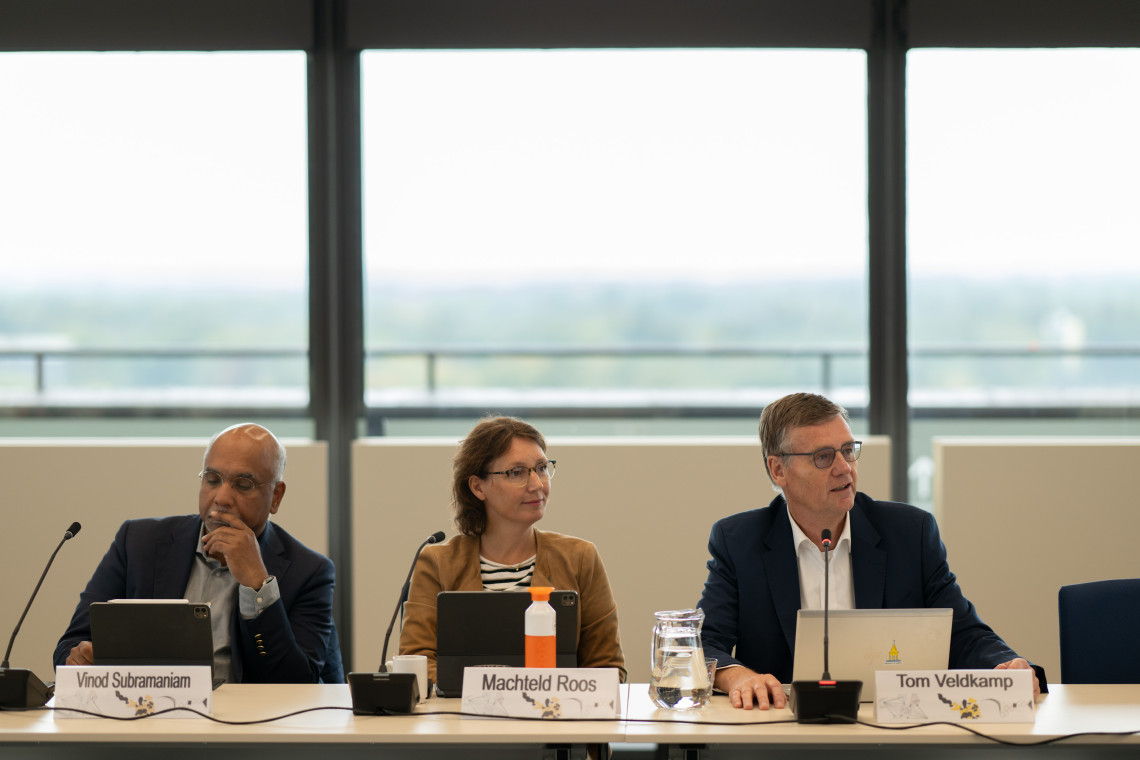



Before the council could begin, the Executive Board took the floor to ‘reflect’ on the budget. ‘Our situation looks different from previous years, thanks to the hard work of many people,’ said vice-president Machteld Roos, followed by president Vinod Subramaniam: ‘There’s a different vibe now, one of cautious optimism. But we paid a price for that, as we had to say goodbye to people. I don’t want to leave that unmentioned.’
Lengthy discussion
The reason for that ‘cautious optimism’ is that, despite financial challenges, UT expects a surplus of 5 million euros next year. Still, ahead of the budget debate, the council drafted a rather lengthy letter, outlining six commitments expected from the Executive Board. Bearing in mind that previous discussions over the past two years were particularly difficult, the final word had not yet been spoken about this budget.
Wednesday’s debate was mostly long-winded, without major controversies. In its letter, the council listed thirty points from the budget that needed more concrete wording. Rector Tom Veldkamp countered the list by pointing to the upcoming institutional plan and emphasised that the intended cultural change at UT ‘is not a step-by-step process’.
‘We are working on harmonising faculties, future-proofing our education, and creating focus in support,’ said the rector. ‘It’s an organic process that requires many conversations. As the Executive Board, we won’t send a blueprint to the organisation and say: this is how you should do it. That’s not how it works.’
Financial concerns about Fraunhofer
Once again, the council stressed the importance of strategic staffing plans and wanted to know how the (expected) cuts relate to the budget. The main sticking point during the meeting was the financial situation of the Fraunhofer Innovation Platform (FIP). It has long been known that FIP posted deep red figures. This budget states that the Fraunhofer platform does not expect to close its deficit in the coming years. For the council, this was a major concern and reason to request an action plan.
President Vinod Subramaniam acknowledged these concerns and said that work is underway on an action plan. It should be ready in the first quarter of 2026, so that the council receives the document for advice by 1 April at the latest.
After one final point of concern – software licence costs – and a short adjournment, the council reached a decision and unanimously approved the budget. The Supervisory Board approved the budget last week, on the condition that the University Council also gave a green light.