

Arranging a meeting with Deininger can be a challenge, simply because his schedule won’t allow it. Dealing with institutions and governments of many countries, his calendar often changes at the last minute. After a moment where an appointment stood for an in-person meeting in Frankfurt where he was supposed to land for a stop-over on his way to India, it eventually took place digitally. From the other side of the screen, Deininger, soft-spoken and seemingly shy by nature, begins the meeting with a range of apologies.
four interviews
The University of Twente will award four honorary doctorates during its 65th Dies Natalis celebrations on Friday 27 November. The U-Today editorial team has interviewed all four honorary doctorate recipients and will be publishing their stories over the coming weeks. The second interview features Klaus Deininger, Lead Economist at the World Bank.
Fighting corruption through land ownership registration
Deininger works as a Lead Economist in the World Bank’s research department. He specialises in helping countries develop robust land policies and institutions, so that they can set up land ownership registers and cadastral offices. He has an impressive scientific track record that makes governments throughout the world want to consult him on their local challenges. His work helps build citizen trust in government institutions, fight corruption, and empower individuals, most notably women and minorities. It also provides the groundwork for investments and credit lines, which boosts economies.
The sheer scale of societal, economic and scientific impact of his work has led professors Jaap Zevenbergen and Ellen Giebels UT to award him an honorary doctorate. How does he feel about that?

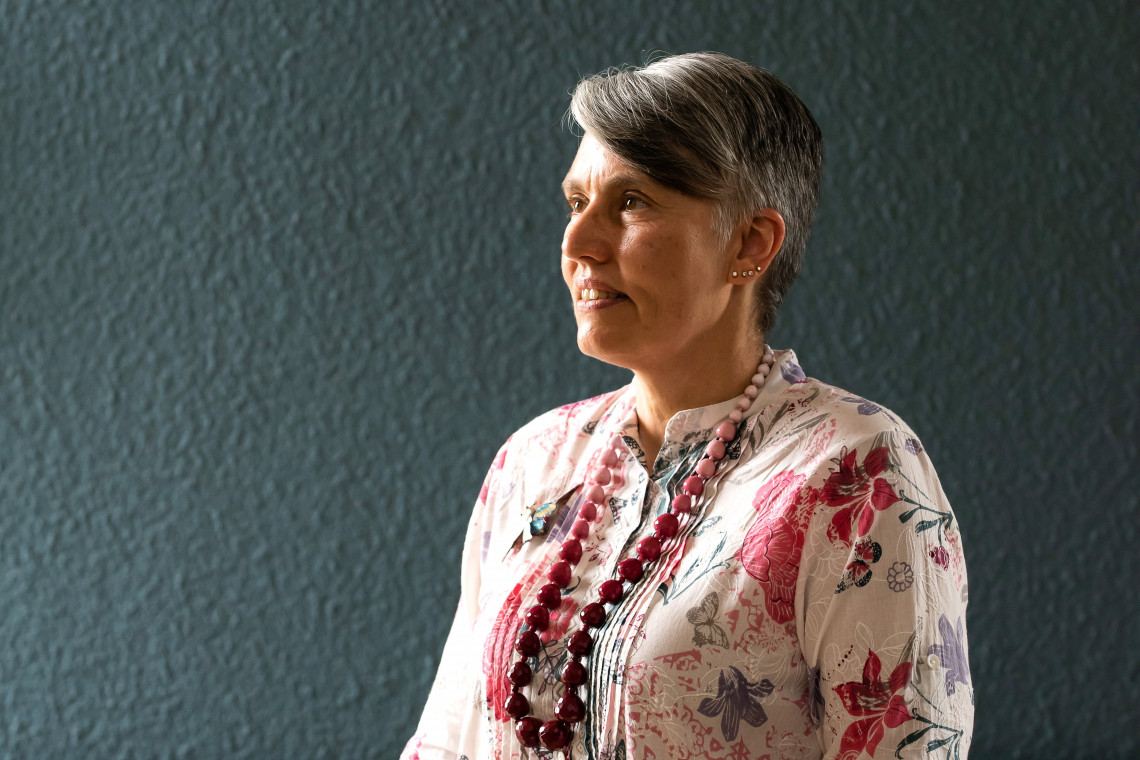
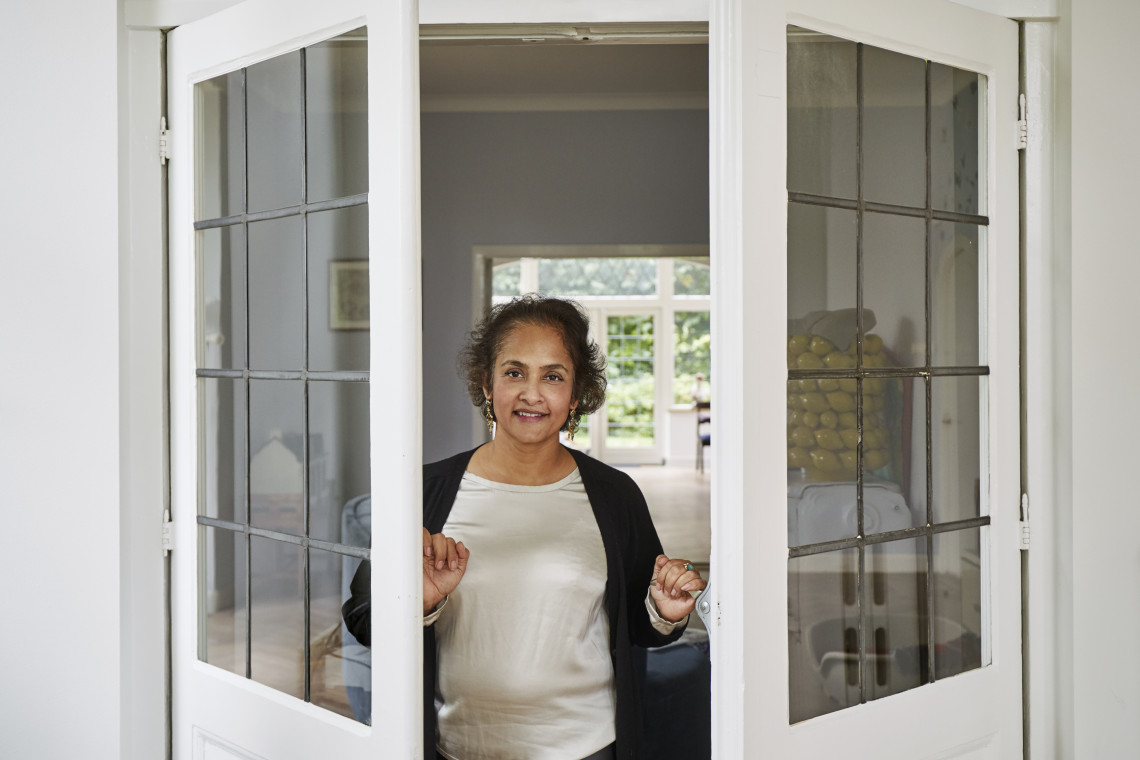
Professors Ellen Giebels and Jaap Zevenbergen.
‘I am deeply humbled and honoured. Yet I’m not sure it is entirely my doing’, he starts. ‘I’ve been very lucky to meet the right people in my life, colleagues and partners in developing countries, who have been willing to join me in going the extra mile and maintaining a high standard.’ As inspirations and mentors, he mentions Hans Binswanger and Gershon Feder, two leading economists and researchers in their day.
To Deininger, being thorough isn’t a quality, it is a moral obligation. ‘Putting out information without considering the consequences can be dangerous in these countries.’
Impact at an individual level
As Lead Economist in the World Bank’s research department, he helps developing countries measure and map out their land, advises on how to implement good land policies, and documents the impact of these policies and institutions on regular people’s lives so that lessons can be learned and applied elsewhere.
Although he regularly brushes shoulders with heads of government, the implications of his work do trickle down to a highly individual level. By setting up precise registries of who owns what, conflicts, corruption, and unlawful evictions are massively reduced, and individuals can instead invest in their land. Providing a robust policy and institutional basis for transparent land trade and investment, it boosts the countries’ economies and hands individuals a strong resource to stand up for their rights.
‘In Ethiopia, I visited the newly built land registry office. They showed me a list of properties and their owners, but I immediately saw that some things had been crossed out. I asked what had happened. In traditional Ethiopian law, it turns out, land ownership automatically goes to the family of the husband if he passes away. As the deceased’s family had assumed this here as well, they had already taken possession of the land. In this case, however, the couple had co-signed ownership. Officially, the widow now owned the land. Precisely because this was registered, she could take it to court, get her land back, and provide for her own family. Stories like these I find both incredibly gratifying and motivating.’
‘Growing up on a farm made me understand
the value and implications of owning land’
Deininger was born near world-famous Rothenburg ob der Tauber, one of the most iconic, quintessentially German towns of Bavaria, halfway between Frankfurt and Munich. As his father owned a farm, young Klaus helped with all the chores. ‘From a young age, it taught me to think on my feet,’ he recalls. ‘It also made me understand the value of owning land, as well as its economic and emotional implications. My grandmother was a widow, but because she owned land, she could feed her family and pay for their education.’
Like most farmers’ sons, Klaus was destined to take over the family farm one day. But his aunt, who was the first in the village to get a university degree, convinced his father that an education would always benefit Klaus later in life, because ‘you cannot lose what’s in your head’, reflecting the general sentiment in Germany in the first years after the war. ‘I was lucky,’ Deininger says, ‘because many of my contemporaries were naturally expected to continue their families’ farms, which often limited their possibilities for advancement.’
Father and mother Deininger, whom he sees as two of his biggest heroes, were very active for the local Posaunenchor, the church brass band, as religion played a key role in the Deiningers’ and wider village life. ‘I enjoyed being active for the youth movement, setting up a football competition, arranging all kinds of things for the community.’
Kibbutz
Having an inquisitive mind, Deininger eventually enrolled at Bonn University to study theology. Immediately after completing his studies, he volunteered to work in an Israelian kibbutz. ‘I had never left Germany before, so I was curious to see the world, and especially the land of the Bible. There was also a general sense of duty among many Germans that we had to make amends for what our country had done.’ The theology programme allowed him to spend one year at the Hebrew University in Jerusalem where he learnt to speak fluent Hebrew and, among other things, passed the advanced Talmud course.
The opportunity to interact with many of the leading intellectuals who had fled Nazi Germany, who were struggling with the challenges of establishing a modern and tolerant state in the face of great adversity, became a turning point. It led him to enrol in economics and agriculture study. After finishing his theology studies in Bonn and his agricultural diploma in Berlin, Deininger considered going for a PhD. ‘But I felt I didn’t have a deep enough understanding yet of the subject to be able to live up to the German academic standard.’
Rejection
He applied for a position at the University of Minnesota in the United States, as some of the world’s most renowned scholars in agricultural research worked there. Being used to a direct German culture of communication, he didn’t immediately understand the American way of rejecting people. ‘They replied by saying that if I paid for it out of my own pocket, I would be welcome. Of course, they expected that that would make me reconsider.’ Instead, he saved up some money, and flew to the US, where he quickly learnt what they had actually meant. But farmers’ son Deininger had a cheeky trick up his sleeve. ‘I paid for everything out of my own pocket for the first quarter and worked very hard. Then I asked my professors to write me a letter of recommendation for the University of Berkeley. Suddenly, all sorts of funding opportunities opened’, he recalls with a smile.
The university made the right decision, and Deininger finished his PhD studies within just two years. Now fully aware of his talents and work ethics, Professor Binswanger introduced him at the World Bank, which really launched his long career.
Parable of the Talents
Despite calling himself ‘less religious today’, Deininger needs the Parable of the Talents from the Bible to explain his enormous scientific output. In it, a master gives large sums of money (talents) to three servants. Two invest it and eventually double the amount, the third is too careful and buries it. When the master returns, he calls the third one lazy, praises the two who have invested, and gives them the sum of the third as a reward.
‘I am expected to be thorough, and I want to be, because
there is so much at stake for so many communities’
With more than 340 scientific books and papers to his name, it is clear he is serious about the message. ‘I feel a responsibility to return on everything people have invested in me. I am expected to be thorough, and I want to be, because there is so much at stake for so many communities. I’m happy that I’m in the fortunate position where our research doesn’t depend on grant money, so we can pursue a study until we have all the results we need, and that our goal is not just the publication of papers themselves, but rather that they are made in support of our advice to governments to make necessary changes.’
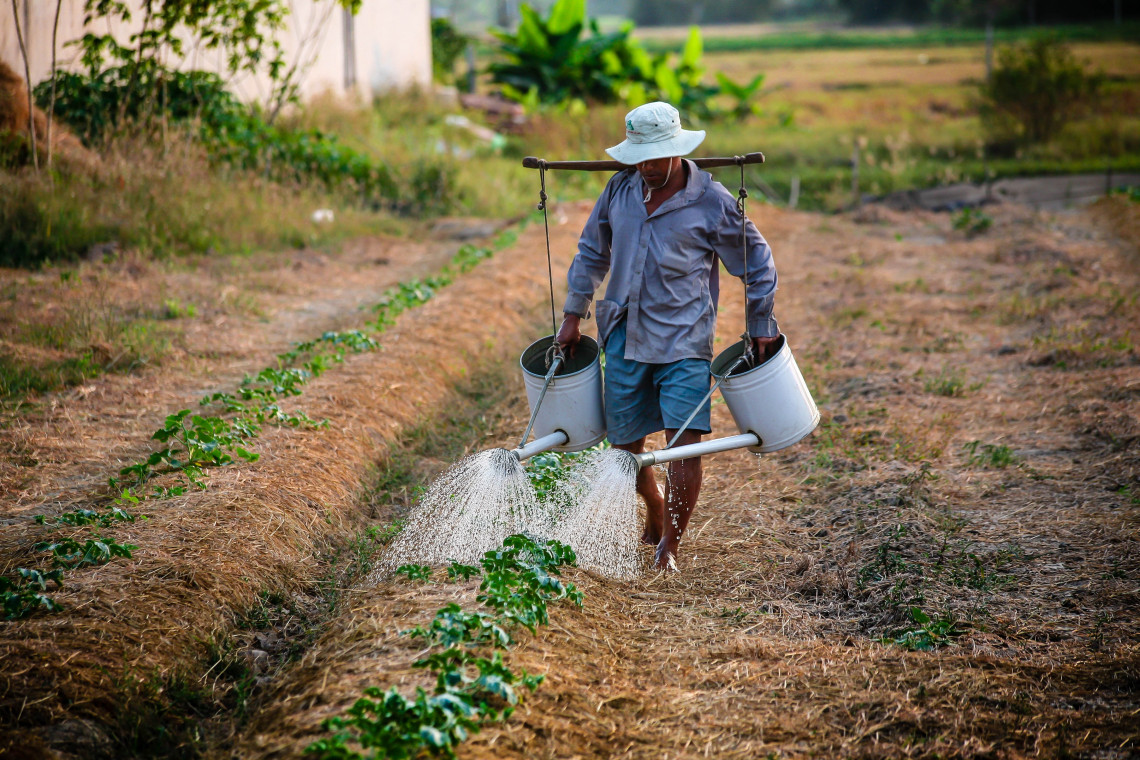
Deiningers' work provides land security for farmers around the world.
Ukraine, Brasil, and India
His biggest achievement? Contributing to the adoption of land policies that made a real change in people’s lives in several countries, including Ukraine, India, and Ethiopia in a way that is now a global benchmark. Another one is helping establish the World Bank’s Annual Land Conference, an yearly gathering for exchanging land registry knowledge and pushing for real change.
In the early 2000s, Deininger worked with UT’s Jaap Zevenbergen and Chrit Lemmen from the Dutch cadastral office to document the impact of Ethiopia’s rural land certification. ‘The country now has Africa’s largest land registry, and it set a standard for others globally.’
In India, Deininger was able to help take the first steps towards digitisation of its land records. ‘Almost every Indian now has a bank account, digital ID, and most recently, documented rights to the homestead they occupy. Especially for poor and tribal communities, this increases access to credits, as they can now access services on their cell phone, rather than having to travel a long way to the next city or government office.’
Ever since 2005, Ukraine was trying to establish a land sales market. A lack of transparency made this impossible, as landowners were concerned about losing their land. Only a complete redesign of the institutional arrangements, codified in a package of eight new laws and about sixty cabinet resolutions to guide implementation convinced Parliament that this reform was both possible and desirable. Land prices more than tripled and, in areas not affected by the war, continue to rise despite the war.
Digitisation
The workload is a lot, but bearable, he says. But to the question of whether he ever takes time off, he smiles. ‘My wife is from the Philippines and she is very supportive.’ Does that mean that she sometimes tells him it’s enough for the day? He chuckles. ‘Yes.’ As she also works for the World Bank, the couple enjoys field trips together, and in their spare time love to be out in nature, either through hiking or cycling on their tandem bike.
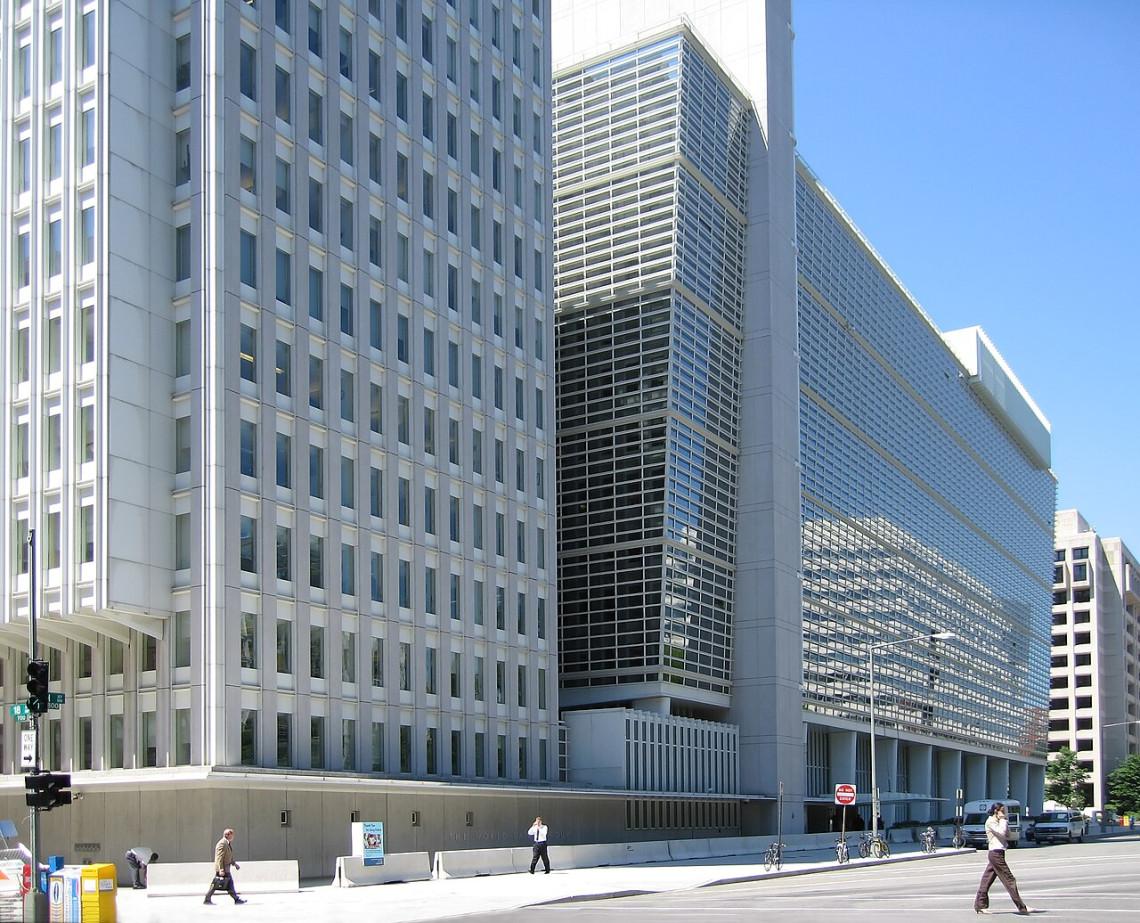
The Deiningers both work for the World Bank in Washington D.C. Photo by Flicker/Shiny Things, Creative Commons License CC BY 2.0.
Although the 64-year-old is looking forward to his retirement, he still has a few achievements on his wish list. ‘I would like to institutionalise land issues a little more within the World Bank. And it would be nice if we could digitise it further, because that opens a whole new world of opportunities.’
A closer collaboration with UT, and ITC’s expertise in the field of geodata would certainly help in that regard, he believes. ‘I’ve never been to UT, but I’ve met many graduates from there, especially the ITC faculty, and was impressed by their competence. A testament to the quality of their training.’
He thinks UT can make vital contributions for governments around the world, by their skills and knowledge in remote sensing, and advancements in AI and IT in general. ‘UT can help ensure that these technical tools are readily usable on the ground in these countries. Also, UT educates international students who often end up in leadership positions. So it makes a difference to many countries by both educating the new leaders and offering them the tools to really make a change.’
He is really looking forward to the doctoral award ceremony in November. ‘I hope to be meeting lots of people, to hear their concerns, and explore potential areas for future research collaborations.’