

‘As the employer of the Executive Board, the Supervisory Board is ultimately responsible for the appointment and therefore leads the selection procedure,’ says Oeloff, who supports the Supervisory Board in this process. For him, it is the second time he has been involved in the search for a new board chair.
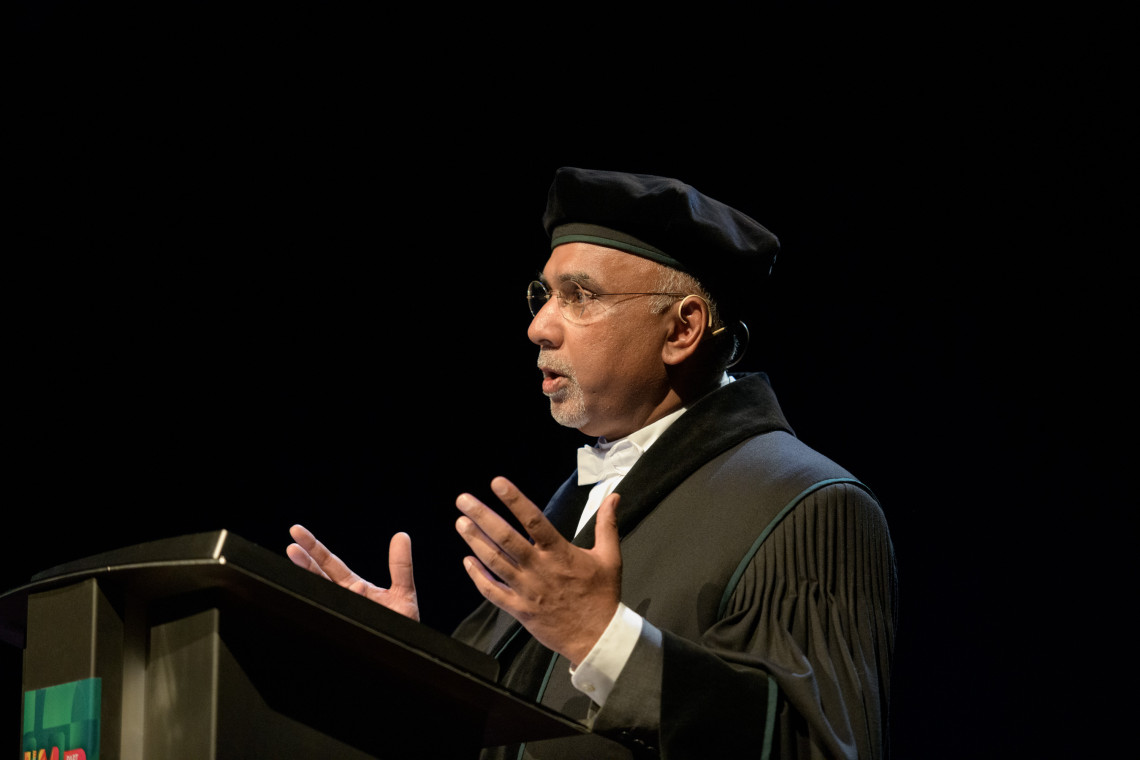
‘After the announcement that Vinod Subramaniam will leave on 1 May for the University of Amsterdam, the Supervisory Board immediately started preparing for his succession in February,’ he explains. ‘The first step is to hire a recruitment agency and assemble an appointments advisory committee. After all, you do not simply post a vacancy like this on LinkedIn.’
Profile
The appointments advisory committee consists of eight members. Because the Supervisory Board has ultimate responsibility, it also selects the committee members itself. The committee includes representatives from the Executive Board, the Supervisory Board, the deans, scientific directors, and the University Council, including one student.
Together with the recruitment agency, the committee gathers input for the profile of the new Executive Board chair. ‘That is the phase we are currently in,’ says Oeloff. ‘To arrive at the right profile, they hold several conversations and ask questions such as: what do we expect from a new chair? Which qualities are important? And for instance, does it matter whether someone knows the region? But the question of whether the candidate should be a man or a woman is not relevant. We have no preference there.’
‘We also hold these conversations with partners outside the UT, such as other educational institutions and companies we work with. Just drafting this profile already takes weeks,’ Oeloff adds.
According to the HR director, the input ultimately comes from around twenty people. ‘The recruitment agency processes all that information into a profile and is free to supplement it with its own expertise.’
The aim is to finalise the profile this month and begin recruiting candidates later in March. ‘We will publish the vacancy in national newspapers, job boards, and distribute it through various networks. At the same time, the recruitment agency will actively approach potential candidates. Based on the profile, they will look for people with the right skills and experience,’ Oeloff explains. The current chair, Vinod Subramaniam, comes from the academic world and was recruited from within that circle. His predecessor, Victor van der Chijs, had a background in business.
From longlist to shortlist
The recruitment process results in a longlist of around fifteen to twenty potential candidates. That is when the real selection begins, as the advisory committee reduces the number to a shortlist.
‘Of course we hope our ideal candidate is among them,’ Oeloff says. ‘We then invite the shortlisted candidates for interviews with the appointments advisory committee. The first round is scheduled for May.’ The committee is divided into two groups of four members. Each candidate speaks to both groups separately, in interviews lasting about an hour. The final round follows a week later. ‘To reach a well-founded conclusion and assessment, we present the candidates with a case.’
The final stage
Before the appointment is made, written advice is also sought from the university’s representative bodies. Through the broad composition of the advisory committee, including members of the University Council, support within the university is ensured.
In the final stage, an extensive screening takes place and the Supervisory Board conducts negotiations on employment conditions.
What happens if the ideal successor does not emerge after all those months? ‘Our ambition is to sign the appointment before 1 July, so the Supervisory Board can appoint a new chair by that date. But if the right candidate is not among them, we extend the process. For as long as it takes to find the right successor for this position,’ Oeloff says.