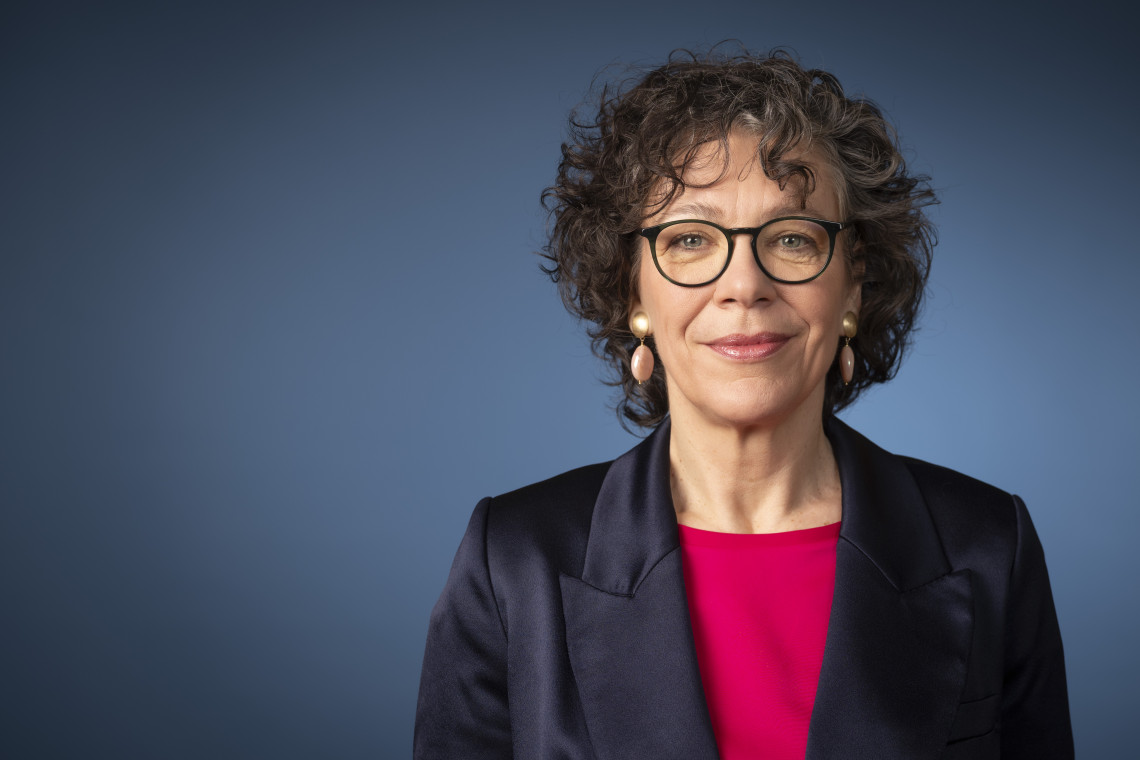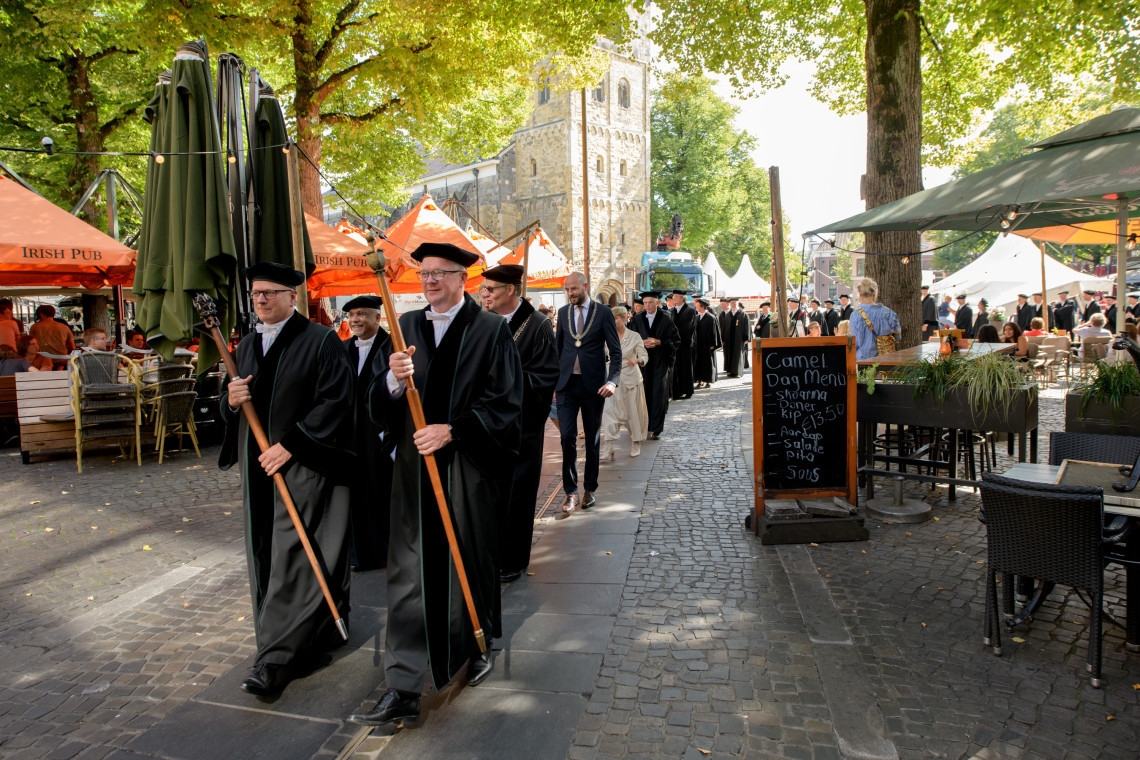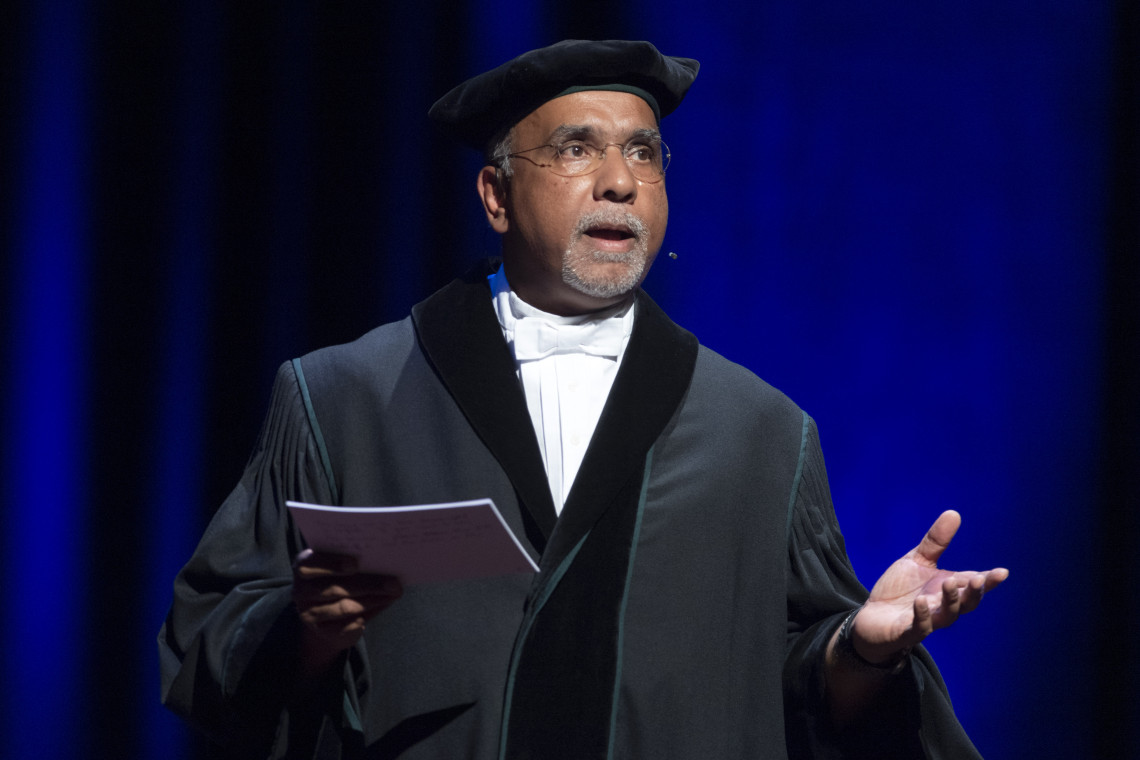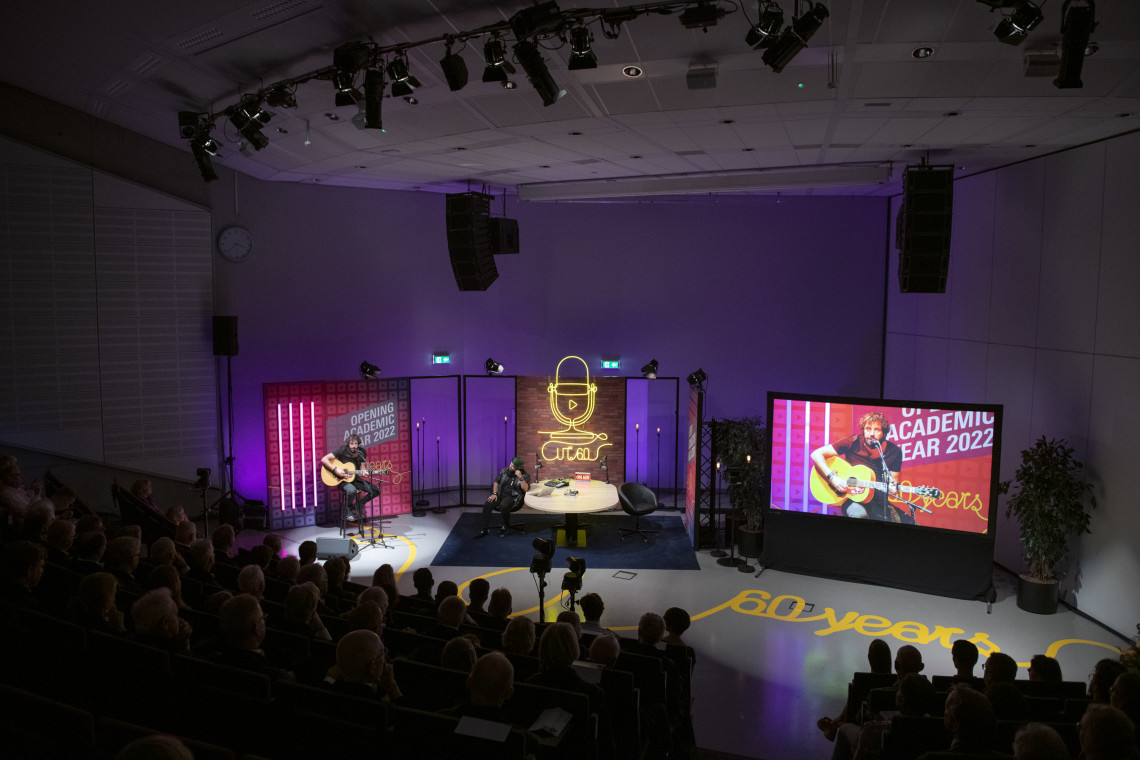


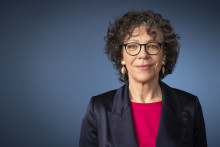
A lot comes together for Heleen Herbert at the opening of the 2026 academic year. In 1990, on this exact date, she celebrated her eighteenth birthday. That was also in Enschede, on the UT campus, during the Kick-In. Today, unless otherwise reported at a later stage, she is here as Minister of Economic Affairs and Climate Policy to address a new generation of students.
Why did you choose Industrial Engineering and Management?
‘I was looking for a broad degree programme that combined all aspects of business, both internally and within society. I was and still am a true social scientist: I love it when lots of different connections come together to produce a common result. In that respect, the programme was exactly what I was looking for. Alongside business administration courses, we had sociology and marketing, but also subjects like thermodynamics and mechanics. A bit of everything. And then we had to figure out how to connect it all.’
You are from Beerzerveld, a village on the edge of Twente. Did its proximity play a role in choosing Enschede?
‘Not really. At the time, this programme was only offered in two places in the Netherlands: Eindhoven and Enschede. The deciding factor was that Eindhoven focused more on logistics at the time, which appealed to me less. Enschede was still using the slogan ‘The entrepreneurial university’ back then, and that appealed to me.
Beerzerveld never held me back or made me feel confined. Of course, there was a lot I didn’t know when I was just starting out, but I come from a close-knit community where many things were possible and which taught me that we are stronger together. I value that enormously. I entered the world with an open mind.
Enschede was good for me in that sense, because there I encountered people and, more importantly, perspectives from all over the world. In a small community, there is often one more or less unspoken norm for how you are supposed to look at the world. In Enschede, I learnt to let go of that and think: ‘Yes, you can look at it that way too.’
What was your student life like? What kind of student were you?
‘A pretty active one. It really was a great time. I lived at Calslaan 22, in a house with sixteen housemates. I love being around people, so I was always looking for something to do.
Among other things, I chaired the conference committee of study association Stress. I love singing, so I took singing lessons and played in various bands. I also did some canoeing at DKV Euros and served on its board. And I was on the Kick-In committee. That kept my diary full enough, so I didn’t feel the need to join a student association as well.
As for my studies, I enjoyed the breadth of the subjects. From the hard technical side to the broad business administration side. It was a lot, but it got me to where I am today.’
Did you already have ambitions to become a minister back then?
‘No, not at all. I’ve never planned my career rigidly. I joined all those committees and boards because I enjoyed doing it and because I grew up with the idea that if you want to enjoy being part of something, you should also give something back. I approached the world with an open mind: ‘We’ll see what comes along.’
But a former manager once told me that I should stop saying things had ‘just happened’ to come my way. Although I mainly made my choices because I enjoyed what I was doing, you always go that extra mile when you take pleasure in something. People notice that, and it leads to new opportunities. So I certainly worked hard for it, with this as the result.’
How did you end up at NS?
‘I owe that to UT as well. Career fairs were organised, and NS happened to be there too. I think there was literally only one day between my graduation and my first day at work. What appealed to me about NS was how tangible it is. I mean, trains, how much more tangible can you get? You literally step inside them. A nice bonus is that you immediately become a customer of the company you work for. You experience first-hand what could be improved or what is needed. It’s a company that a large part of the Netherlands interacts with every day. That is something I have always looked for in my work. So when I was asked to become a minister, I didn’t need long to think about it.’
What have you taken from your time at UT into your role as minister?
‘That broad social-science perspective, making connections between different areas. UT and Twente in general are known for entrepreneurship and practical, applicable science. Those are crucial for strong policy. Thorough research into societal challenges allows you to form a clear picture and make smart decisions based on it. You also learn that many different factors contribute to how a situation has become what it is. And therefore, how you can influence and improve it. That certainly applies to something as vast as a country’s economy and prosperity. And, of course, the courage to dive into something with an open mind. UT is good at that too, as a university that began as an ‘experiment in the woods’.’
What will you address in your speech?
‘The overarching theme is courage. It is a quality that UT has demonstrated for years, and it is also the key word associated with UT’s 65th anniversary celebrations. We face major societal challenges in the Netherlands that require breakthroughs. And to achieve those, sometimes you have to dare to venture off the beaten track. It is about developing and retaining talent, among other things. Targeted innovation within sectors in which the Netherlands already plays a key role. Rapid valorisation, translating scientific knowledge quickly and effectively into concrete entrepreneurship. Making sure startups and scale-ups have a chance by ensuring sufficient funding, certainly including UT spin-offs.’
Students are grappling with major issues such as the geopolitical situation, climate change, and their own mental wellbeing. What would you like to tell them?
‘I’m not someone who says everything will be fine, but of course things aren’t hopeless either. The world needs today’s students to tackle these kinds of problems and work on solutions. To apply their smart, analytical skills. It matters that you step up and contribute too. We need you, and at the same time, you don’t have to do it alone. If you dare to combine your subject-matter expertise with the ability to work together across disciplines, the world is open to you.’
What would make this day a success for you?
Laughing: ‘If I have a lovely birthday, just like thirty-six years ago. Before the ceremony, we’ll be visiting several impressive Twente-based companies at different stages of development. Demcon, for example, the MESA+ Nanolab at UT, New Origin, and FlowBeams. I’m looking forward to that. I’m very curious to see them. And it’s simply nice to see my old stomping ground again. My mother will also be in the audience during the Opening of the Academic Year, which is very special to me.’