


In their letter, they advocate a ‘tuition‑free governance’ scheme: those who opt in would give up their entitlement to educational facilities and exams. In return, they would retain access to student finance, the public transport pass, housing, and student banking.
According to the initiators, the scheme does not have to replace compensation via the Student Support Fund (StOF). ‘We propose introducing a tuition‑free board year as an additional option, allowing students to choose the model that best fits their personal situation,’ the letter states.
More than forty hours
When you become a full‑time board member of a committee or association, or a member of one of UT’s nine student teams, it is common to pause your studies for a year. However, you continue to pay tuition fees, even though you are not attending lectures or taking exams.
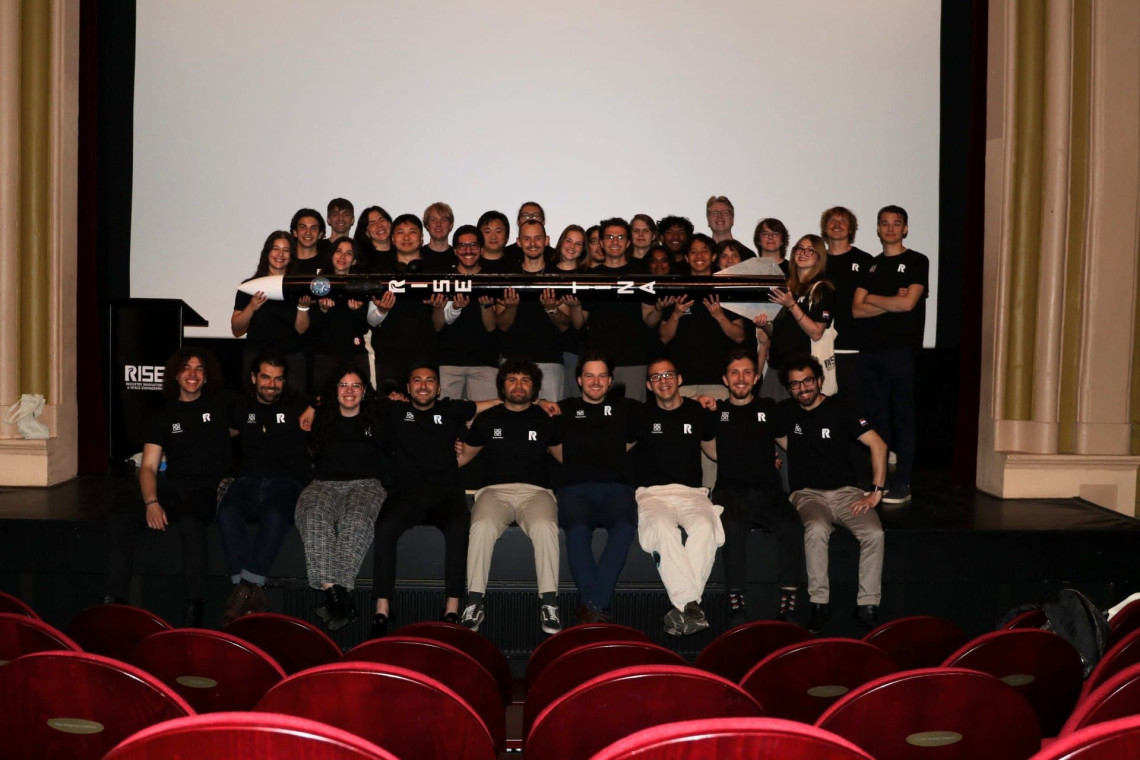
‘That doesn’t seem right,’ says Marijn Grashoff, team leader of RoboTeam Twente. He explains that the initiative began last year within the Stichting Student Teams Twente, of which his team is part. ‘We do not use the university’s educational facilities, yet we still pay at least 2,600 euros in tuition fees. At the same time, we work long weeks, often exceeding forty hours. As exciting as a year in a student team is – and I would not trade it for anything – there is basically no room to take on a part‑time job alongside it. I expect the same applies to other full‑time board members.’
Active student life under pressure
The teams also observe that active student life is under pressure. ‘We can see a downward trend on campus,’ say team leaders Jacobine Tempelaar and Guusje Groot Koerkamp of HyDriven and Surge Twente. ‘It is becoming increasingly difficult to fill board and committee positions. We even understand that the Student Union is experiencing this.’
What explains this trend? The team leaders point to several possible factors, ranging from the aftereffects of the COVID‑19 pandemic to study pressure, financial barriers, and a less favourable compensation scheme under the revised StOF. ‘Even the proposed long‑study fine, which was quickly scrapped… I would not rule out that it discouraged students,’ Grashoff adds.
The student teams themselves report mixed experiences in their recruitment campaigns. Some have seen increased interest, while others face greater challenges. According to the team leaders, the main issue lies ‘at the entry level’, where fewer students initially sign up.
Stigma
Beyond recruitment, the teams hope for action from the university. In addition to the proposed scheme, they want to see the stigma surrounding a ‘gap year’ reduced. ‘It is still sometimes wrongly seen as putting your studies on hold. As if you are wasting your time,’ says Tempelaar.
‘That is simply not true,’ Grashoff responds. ‘During such a year, you learn more than you would in lectures, in my experience. It is an investment in yourself and your future that pays off quickly. That is no reason to let the costs become so high.’
He adds that student teams are not only an investment for students, but also for the university. ‘We contribute to the visibility, reputation, and societal impact of the university. It benefits both sides. Most teams have existed for at least ten years. Given that level of maturity, it is time this is better recognised.’
Executive Board: ‘Positive in principle’
The Executive Board has ‘received the letter positively’, spokesperson Laurens van der Velde says. ‘The topic of tuition‑free governance was discussed during deliberations on the new Student Support Fund (StOF). Several universities already have such a scheme. Further investigation is needed to determine whether and how we can implement this. In principle, however, we are positive and will develop this further. I cannot yet provide a precise timeline.’