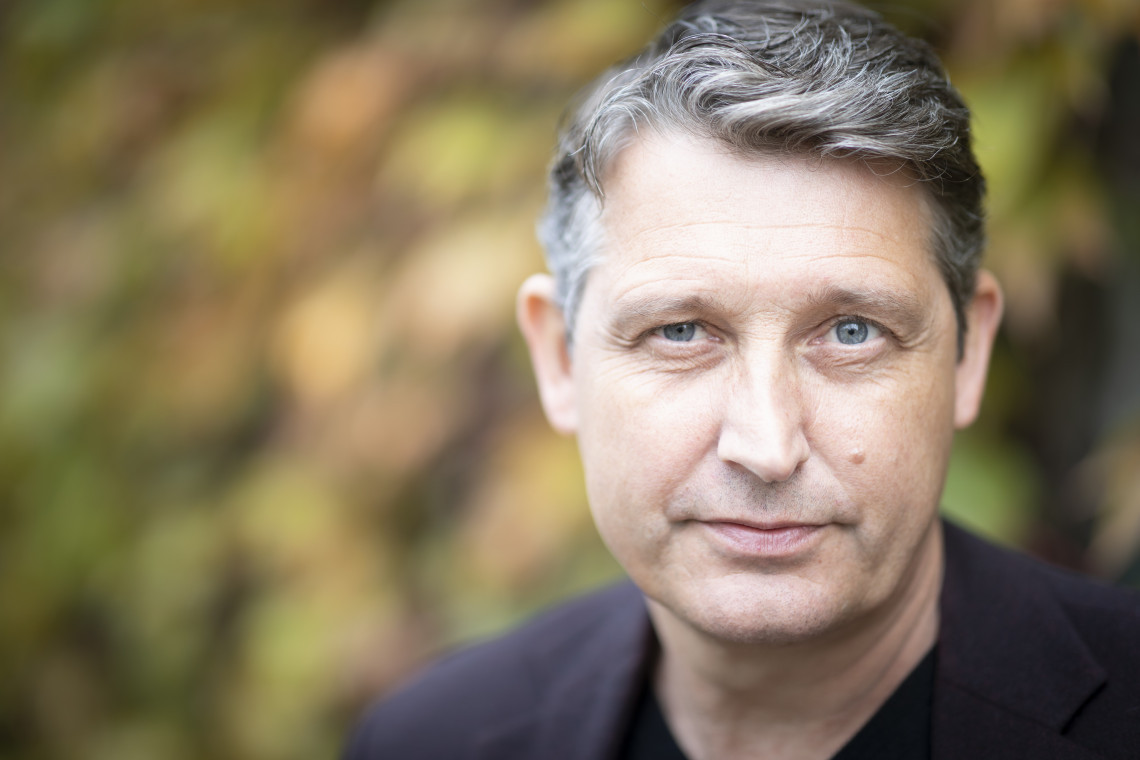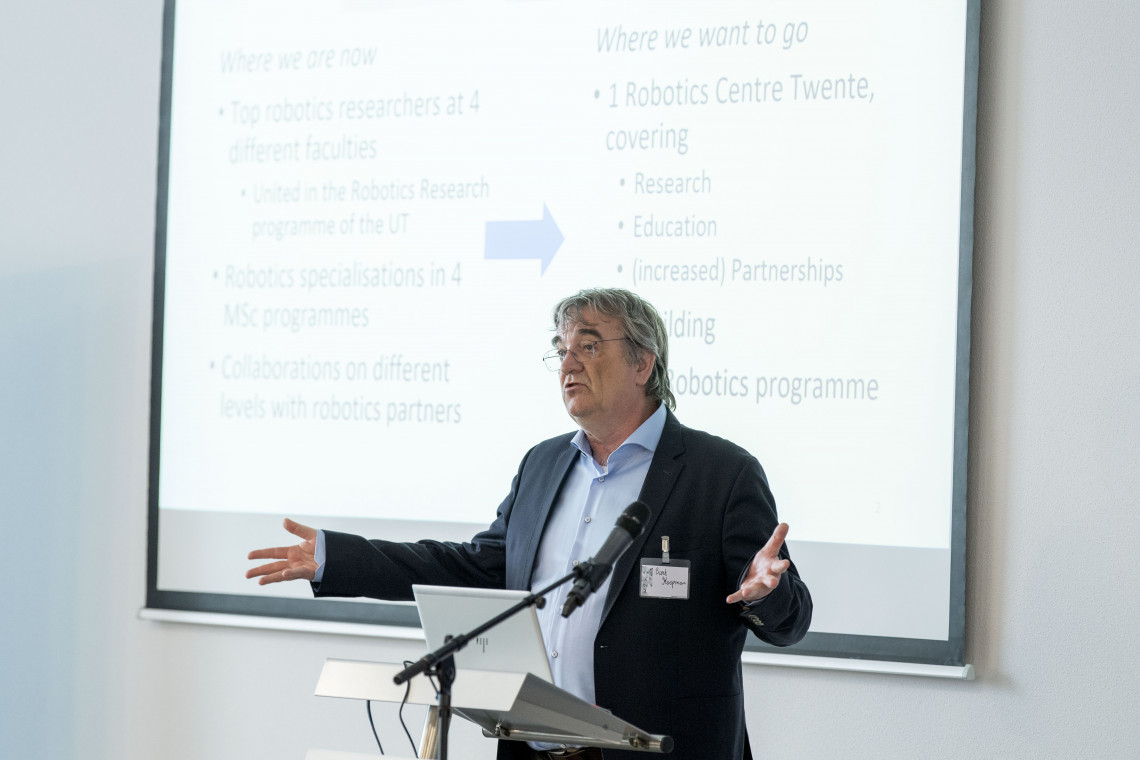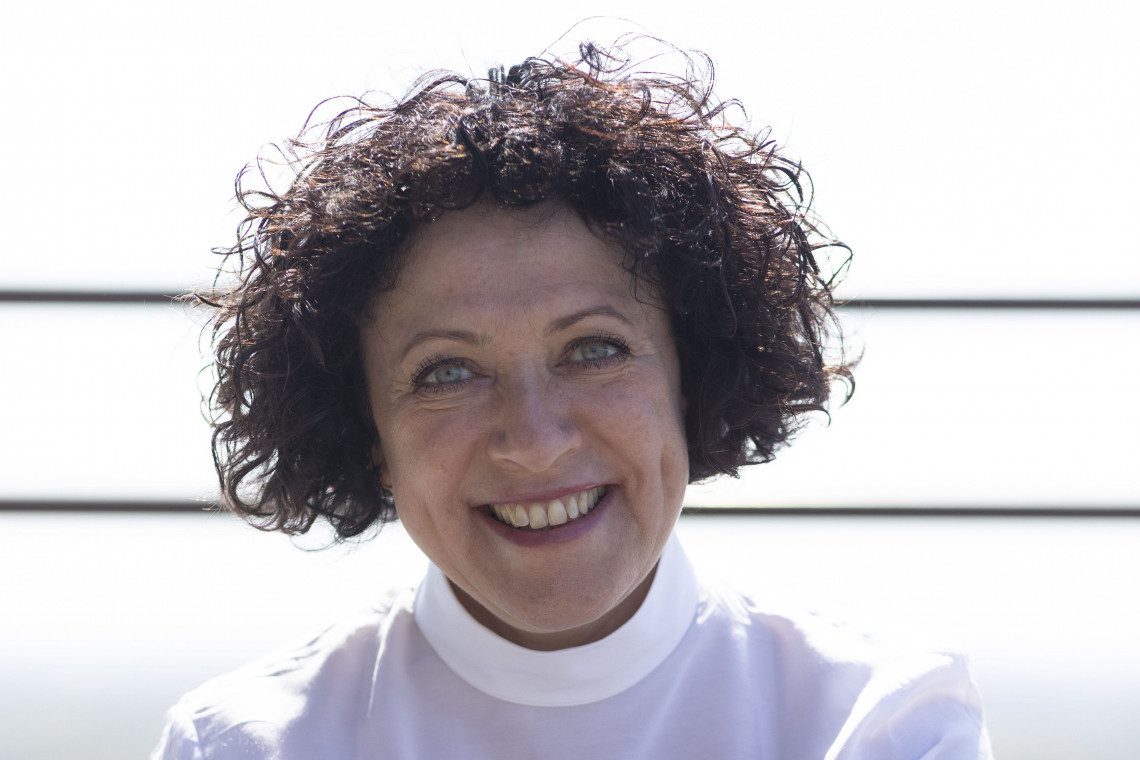


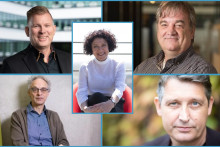
Tanya Bondarouk, Faculty of BMS:
‘In an ideal world, every school in Twente knows our programmes’
‘I have said it before, and I will say it again: in 2026 we are still focusing on increasing our name recognition in the region. Many schools still think UT is only a technical university. That presents opportunities. So what do psychology and communication sciences mean in a Twente context? Because of declining international student numbers, we are not focusing solely on pre-university students. Part-time students and people interested in lifelong learning programmes are very welcome as well. Ideally, every school in Twente would know our programmes.
Another challenge for us is focus. We want to concentrate on a limited number of larger research areas that benefit society. That unfortunately means that smaller research proposals do not always make it through. We are working on topics such as the impact of new, disruptive technologies like AI.
Internal workload also deserves attention. On paper, the total number of hours may not look excessive, but you cannot see what goes on in people’s heads. There is still room for improvement there. People should enjoy working here.
Together with the UT Alumni Office, we are setting up a dedicated section for BMS PhD graduates. There are many of them, but they are not yet very visible. At the same time, we are considering how we can offer them better career support.’
Bondarouk will be reappointed for another term as dean as per 26 March.
Jeroen Cornelissen, Faculty of S&T:
‘Pride needs to return to the faculty’
‘My first grandchild was born at the end of 2025. Her name is Nova. In the context of TNW, 2026 will be the year of aura nova for me, a new breeze. With the recent appointment of André ten Elshof and Devaraj van der Meer as vice-deans, the new faculty board is complete. That new breeze should be gentle, not another storm like we have seen in recent years. I want calm and trust to return, with less focus on money, and more on content.
 Since the turn of the year, we have formally been working with departments instead of research groups. Making that work properly is a major task. How does coordination work, how do the financial flows run, and what is expected of individuals? As a board, it is important that we receive input from as diverse a group as possible. As things stand, we are all white, middle-aged men, which inevitably brings the risk of blind spots.
This year, we will also work on a strategy. The reorganisation plan was a first step, and we are already feeling its impact with the departure of several colleagues. The evaluation will follow this year. Now we need to make choices about the key strategic lines. What should we strengthen, and what should we do differently? If opportunities arise for major research programmes, we should not just respond, we should be at the drawing board. Not following the agenda, but setting it.
Another challenge this year, and one that applies to the entire UT, is maintaining student intake. We are not going to do anything rash. Calm is key. Above all, I want pride to return to the faculty and to move away from negative gut feelings. We can do that by creating a culture that is clear, critical, and constructive. Jokingly, those have already been dubbed the three Cs of Cornelissen.’
Boudewijn Haverkort, Faculty of EEMCS:
‘We will launch new AI tracks from September onwards’
‘At EEMCS, six educational innovation initiatives are on the agenda for 2026. Last year I said we needed to do more with AI as a faculty, and now we are taking major steps. Within both the I-Tech master’s programme and the Applied Mathematics master’s programme, we are developing a new AI track that we want to launch this coming September. The Create bachelor’s programme will receive a stronger AI profile from 2027 onwards. That requires careful coordination, as it also has to align with the programme portfolio of Vrije Universiteit Amsterdam, where Create is also offered.
The Business Information Technology bachelor’s programme also needs attention. Student intake is under pressure, and the programme overlaps with Computer Science and Industrial Engineering and Management. From September onwards, BIT will therefore be given a stronger and more distinctive profile.
We are also increasing UT’s visibility in Flevoland. This year, we are starting a collaboration with Windesheim in Almere, where we will offer a pre-master’s programme in IT. That will create a new pathway for students to UT.
I see opportunities for the university to strengthen its connection with society. Themes such as health and safety should be more explicitly embedded in all our programmes. That would better reflect societal needs and student interests.
Finally, I am looking forward to the next steps in the Reinventing UT change process. It is about more harmonisation and better alignment between faculties and services, with more collaboration and less competition. This year is crucial. The plans are there, now we need to implement them wisely. That demands a lot from everyone at UT, as we are renovating our house while still living in it.’
Bart Koopman, Faculty of ET:
‘We should allow ourselves to celebrate successes more often’
‘You could say we narrowly avoided disaster. By cutting costs significantly last year, we managed to avoid a reorganisation. That has created some breathing space for new plans. Overall, we also have more students this year than last year. In the longer term, attracting students will become more difficult, but lifelong learning offers opportunities, as do companies that want to upskill their staff.
In our manufacturing branch, for example, there are opportunities for collaboration with defence. That would require building modifications to allow for more controlled access. UT is very open by design, with people able to move freely across campus. We are also already thinking about the redesign of the Horst building, which we want to start next year.
There are plenty of challenges as well. We want to consult more with other faculties, to know who is responsible for what and where, so that we can work together more efficiently and strengthen mutual ties.
We could also do more to showcase what we are capable of. Visitors are often impressed by the technological possibilities we have. That reflects the engineer’s pragmatic mindset: solve a problem and move on to the next. But it would be good to celebrate our successes from time to time.’
Freek van der Meer, Faculty of ITC:
‘A year in which we will work on our future’
‘We are coming out of an extremely difficult period for many people due to an unavoidable reorganisation. The clarity we now have as a faculty is welcome. 2026 should be the year in which we start working on our future. The heads of the new departments are known, and 1 April is our target date for having the new structure in place, although that will not happen overnight.
 Changing a structure is one thing, but changing culture is more challenging. To quote consultancy firm Fundatis, ITC has always been a family business. The emphasis was very much on family and less on business. We want to retain that sense of family, but the focus needs to shift somewhat towards efficiency and effectiveness. From a family business to a business family, if you like.
I expect 2026 to also be the year of lifelong learning, with UT taking serious steps to establish it as a fourth pillar. With our own platform, Geoversity, we have reached more than ten thousand learners in just one year. That says a lot about the potential. We also have plans for our own bachelor’s programme. Something will happen, that is certain. What it will look like will become clear this year.
We also have the ambition to strengthen our ties with politics and society. Communicating the added value of development cooperation is a challenge, especially given today’s geopolitical instability. Remaining agile as an organisation is essential, both for ITC and for UT as a whole.’