

How would you describe this year’s programme in three words?
Programme maker Hiska Bakker: ‘Informative, exciting, and curious. Every week, we have an evening devoted to science, technology, culture, politics, or questions about life.’
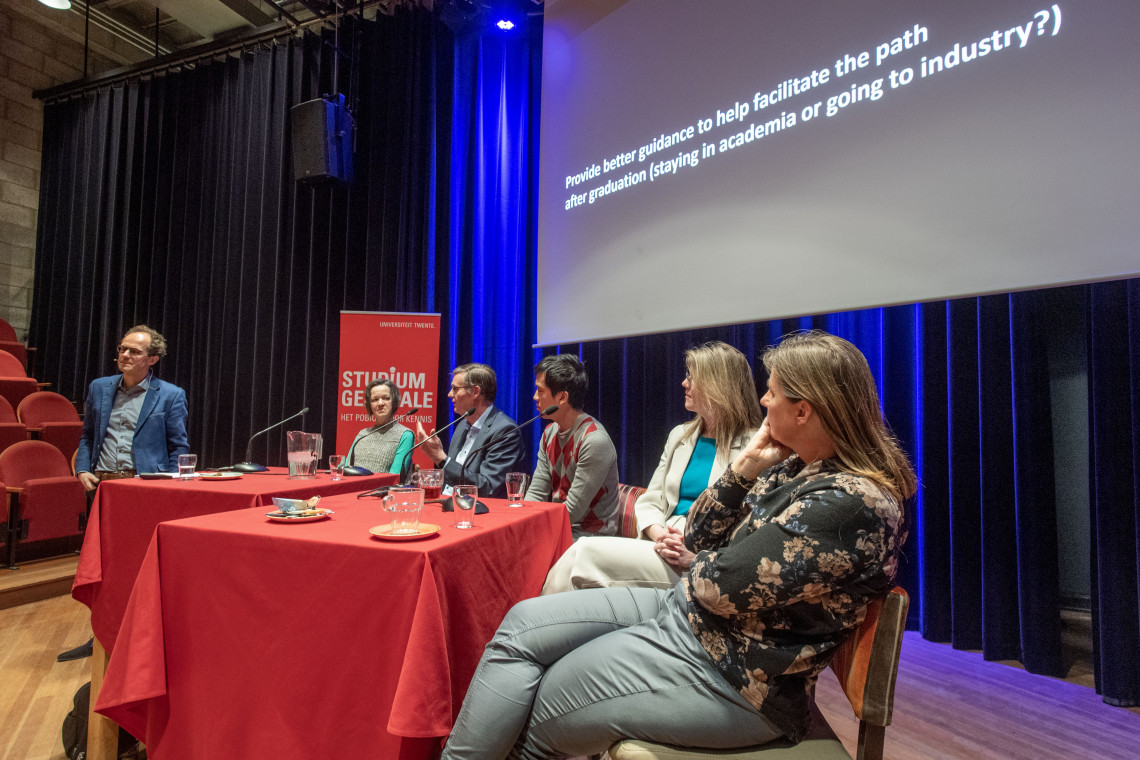
Colleague Pascalle Verlaan: ‘I would go for: diverse, thought-provoking, and engaged. We always make room for questions from the audience.’
So, what can we expect?
Bakker: ‘It goes in all directions. We have scientific lectures, three Science Cafés, and lectures on personal issues. For example, UT psychologist Ed de Bruin will explain how to fall asleep faster and sleep more deeply despite rumination, exam stress, social media, and other distractions. And in the lecture ‘Sloppy science: cheating in science’, science journalist Stan van Pelt will discuss scientific fraud, an issue in which AI is playing an increasingly important role.’
Verlaan: ‘Mentally healthy in a messed-up world seems particularly interesting for students. How do you deal with high expectations, performance pressure, money, and finding a job? More and more is expected of us as people, but how do you make sure you do not let it drive you crazy? For this event, we have invited psychologist Thijs Launspach. He will discuss how to avoid getting swept up in all of this.’
What makes this programme different from last year’s?
Bakker: ‘You could say that, in consultation with our Studium Generale committee of students and staff, we have included more topics that engage with current affairs and their wider social context. For example, one of the Science Cafés will focus on the strain on our electricity grid, while a few weeks later we will discuss the emergency kit you need in the event of disasters and crises.
In November, there will be an event about how the Ministry of Defence can become more agile. It is a cumbersome organisation, which you could actually compare with UT. Both organisations need to anticipate situations more quickly in today’s constantly changing world. That is why I expect the university can learn a lot from this. It will be an informative evening, and we will also invite the Executive Board.’
Verlaan: ‘Ultimately, you end up with a mix of hard and soft science, and different opinions.’
Do you want to get a discussion going?
Verlaan: ‘I expect Food for Thought to spark some discussion. It is about the new, more automated food industry and where our food comes from. Some people will hear a lot of new things that they were not aware of before.’
Bakker: ‘In my circle, some people said after watching the documentary: ‘I will never eat meat again.’ So I expect it to have an impact on the audience. But the same goes for Ready for crisis: preparedness or paranoia? Is it excessive to prep and prepare for a disaster, or is it actually sensible?’
Which evening are you personally looking forward to?
Verlaan: ‘I would choose the visit of UT alumnus Martin van den Brink. I am curious to see whether the former ASML executive can explain how students can pursue their dreams.’
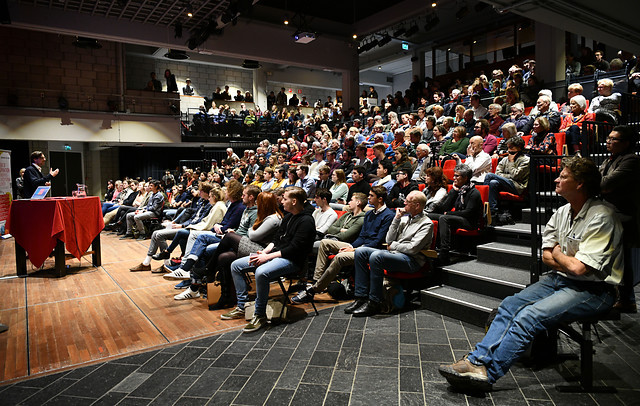
Bakker: ‘His visit is why I chose ‘exciting’ at the start of the interview. At what point in his career did Van den Brink realise that ASML would become so important in the global chip industry? I am also looking forward to the opening on 15 September. That is when I always get butterflies and feel that ‘we’re back’. The first evening is always exciting as a programme maker. How full will the room be, and what kind of reactions will we get during the Q&A? On evenings like that, I get the feeling: this is Studium Generale, and this is why I do it.’