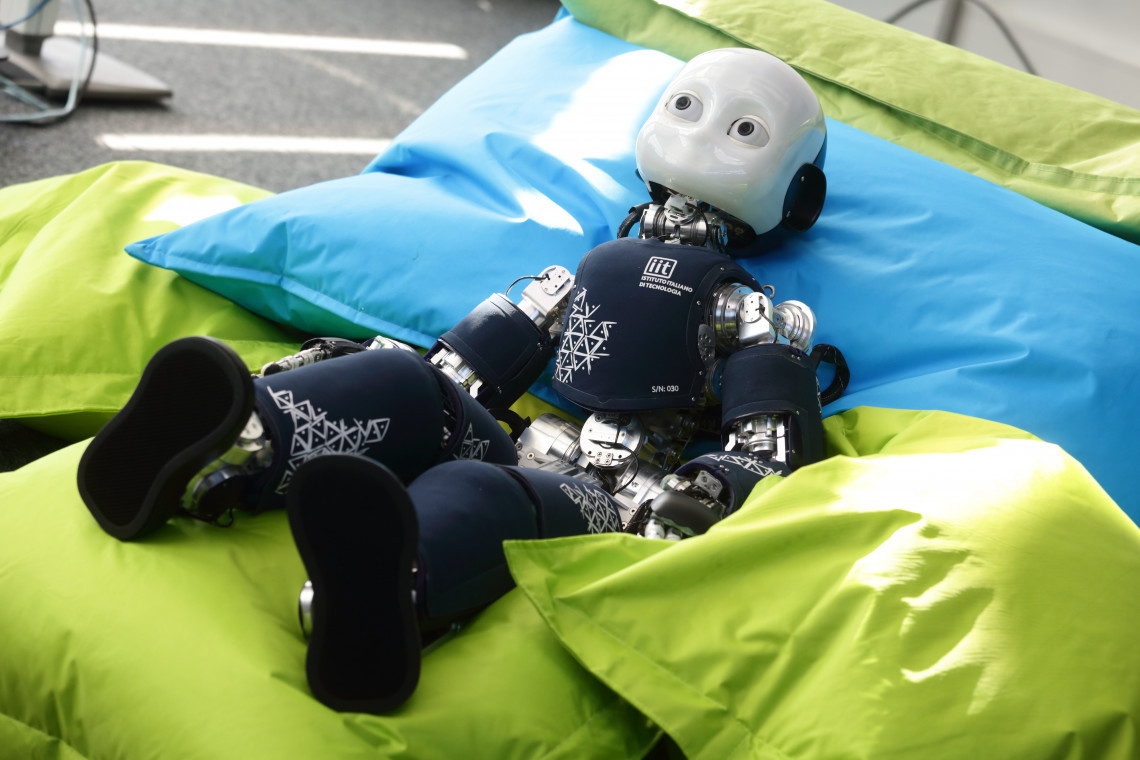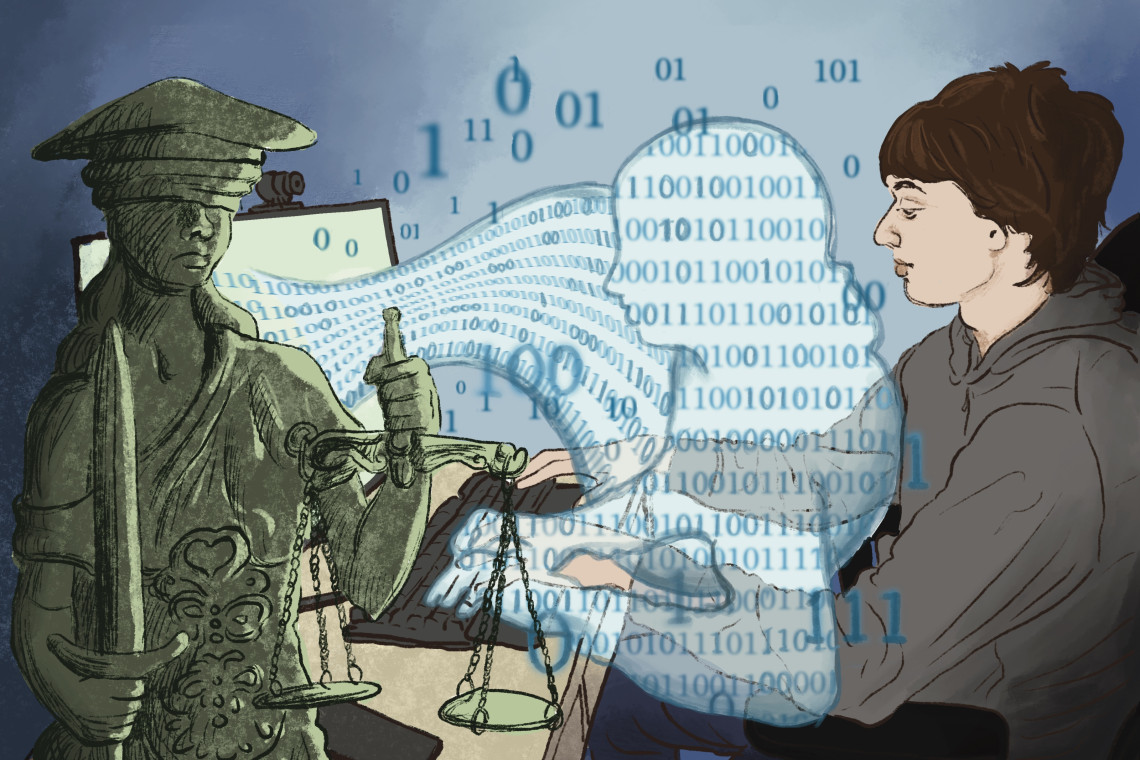



Empty lecture halls and plenty of AI. Higher education is struggling with 'study crisis'. And: What are theses worth, now that AI is co-writing? These are the headlines of two recent background articles in national newspapers about higher education. Trouw, in particular, writes about the 'study crisis', as a result of less student attendance during lectures, less preparation for those lectures and full use of artificial intelligence.
Risks
'I wouldn't immediately say that there is a crisis, but there are certainly risks for education,' says educationalist Ilona Friso-van den Bos. 'If you look at the use of AI: assignments made should be the product of the student's thinking. That can indeed undermine AI. On top of that, if the teacher is not prepared for this use and does not set up the assignments and learning objectives accordingly, AI use by students poses an additional risk.'
As far as we are concerned, we have to approach this in a very holistic way' - Maarten Renkema
This is confirmed by her colleague from the BMS Professional Learning & Technology section, Maarten Renkema. 'The reduced attendance during lectures that Trouw writes about is certainly recognizable. This has been going on since the corona crisis. AI is just an extra dimension that puts further pressure on that phenomenon. Ultimately, as a teacher, you want to give your students a reason to come to the lectures. That is a struggle for many teachers.'
It is not for nothing that artificial intelligence in 2026 is often cited as the culprit. According to Renkema and Friso-van den Bos, however, it is not a clear question of right or wrong. You can certainly use AI in a positive way, according to Friso-van den Bos. 'Let it help you to make a study planning. Or have a chatbot question you about the content of your teaching material, to check whether you have understood it.' 'As with almost all technology, you can use AI in a positive or negative way,' Renkema adds. 'The most important thing is that you understand what you are doing. That your basic knowledge is in order, that you are aware of the risks and pitfalls and that you deal with them responsibly.'


lona Friso-van den Bos and Maarten Renkema, both working in the BMS Professional Learning & Technology section.
AI literacy
According to the assistant professors, this context is all about so-called AI literacy: can you handle AI systems critically, responsibly and effectively? They are both researching this. They also co-wrote the AI-GO!, published last year: a so-called framework for AI literacy in education. 'As far as we are concerned, we have to approach this in a very holistic way, at the system level,' says Renkema.
'It makes no sense if you start banning students from using AI. Everything has to do with the specific course, the learning objectives, the examination, the AI literacy of teachers themselves...', he continues. 'Even the future field of work plays a role. If we don't teach students to work responsibly with AI – or choose not to work with it, while that may be the modus operandi in the field, then we have not given students the right tools during their studies. That makes it difficult to prohibit the use of AI by definition.'
Not all courses are the same
Also important, Friso-van den Bos adds, is the local context. 'At the UT-wide level, awareness about AI literacy is starting to become more rooted. Ultimately, it is up to the programme to shape it itself. AI literacy must fit within that local context: what should students learn, what can they use it for or not, how do you ensure that teachers have enough knowledge? A different answer will apply to each programme. That step can be taken more at the UT.'
Renkema points to a certain stratification in the use of AI. 'There is a build-up in that. AI still makes numerous mistakes. But to recognize them, you need to have basic knowledge of a specific domain. With an AI-written text, a layman does not easily see what is right or wrong. An expert will see right through it. With that in mind, you can also organize your curriculum as a study programme. Perhaps by limiting AI in the beginning – because there is certainly something to be said for that – and slowly introducing it later. Moreover, teachers can also adjust their assessments: let the percentage of the final grade depend less on the written report and more on the final presentation and accompanying discussion.'
Aid or fraud?
Because it is certain that AI will cause things to shift within education. Renkema and Friso-van den Bos also notice it in their daily practice. AI as a writing aid, which the NRC article warns about so much, is no stranger to them. 'You see that a lot, especially in theses,' says Renkema. 'Some paragraphs are suddenly full of expensive terms, but have little substance. Is that fraud? I would say: not necessarily, if it is not directly for a grade and there is still room for improvement. As an institution, we have also said in an AI statement: AI is a tool.'
It is different with hard evidence and work that goes for a final assessment, according to Friso-van den Bos. 'Then a step to the Examination Board is very logical.' She herself teaches the subject of academic writing. 'Using a tool like Grammarly is quite obvious to ensure an error-free text. But as a student, you absolutely have to master how you set up a certain paragraph structure and structure a text, you name it.'
'As a student, you grow by embracing the struggle, instead of outsourcing it to the chatbot' - Ilona Friso-van den Bos
Something that not every student always understands very well, she knows from experience. 'I was recently asked by a student: what if I have a very good text written by AI, so that it is indistinguishable from the real thing? Then I asked the counter-question: what if I then have that text checked by AI, exactly as if I had actually checked it? The student didn't agree with that, haha.'
Embracing the struggle
What Friso-van den Bos, as an educational scientist, wants to stand up for is the importance of doing the work yourself. 'Especially when we talk about writing, I hope we continue to see it as a valuable activity. Writing is not the product of learning, it is learning. When you write, you structure, make connections, process information. Many students underestimate the added value of this.'
After all, AI can also induce a certain laziness, if students reflexively outsource their headaches to ChatGPT. 'While students should have the space to grow. You do this by embracing that struggle, instead of outsourcing it to the chatbot: coming to the conclusion that something doesn't work or that you can't come to the right answer, that you try to do things differently, that you get feedback from your teacher or fellow students, et cetera. And that you get the lid on the nose every now and then. Unfortunately, the added value of that learning process is sometimes grossly underestimated.'