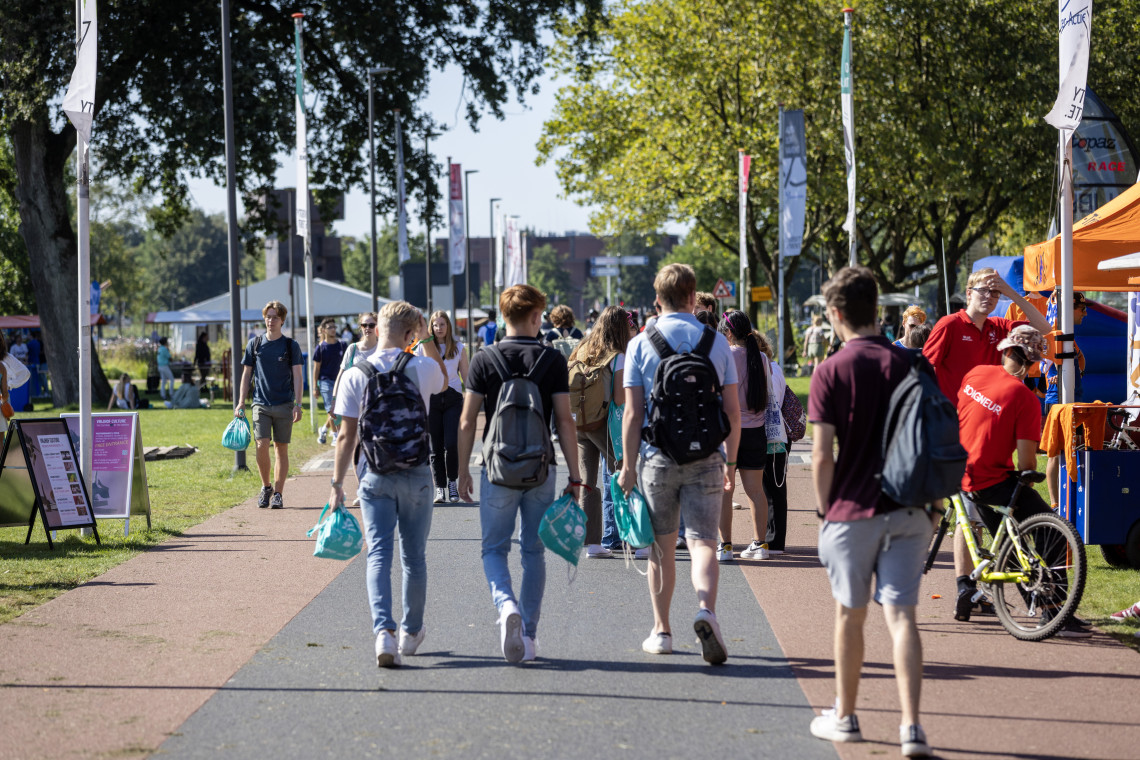


Compared with last year, 160 more bachelor's students and 29 more master's students arrived on campus, bringing the totals to 2,186 and 1,233 respectively. A further 83 students enrolled in post-initial education programmes.
The largest numbers of new bachelor's students enrolled in traditional engineering programmes: Mechanical Engineering, Civil Engineering, and Electrical Engineering. Both Dutch and international student numbers increased in these programmes. The rise in Psychology enrolments was mainly driven by students from the region.
According to the report, the increase in master's students was particularly noticeable in the so-called Beethoven programmes: Robotics, Computer Science, and Electrical Engineering. UT had expected fewer of its own bachelor's graduates to continue into a master's programme this year than last year, but an increase in international students, particularly from India, Italy, and Spain, made up for this.
Recruitment efforts paying off
According to the management report, key reasons for the growth include targeted recruitment in priority countries, school visits in the region and across the German border, and investment in campaigns to raise UT's profile in the west of the Netherlands.
The report also states that the Netherlands has become a more attractive destination for international students because countries such as the United States and the United Kingdom have tightened their admission rules.
Nevertheless, the report stresses that student numbers are still expected to decline in the future, particularly due to demographic developments in the eastern Netherlands and uncertainty surrounding government policy on internationalisation. UT will therefore continue to pursue the recruitment strategies mentioned earlier in this article.