

‘I was quite shocked by it,’ Kastelein says about the research findings. ‘These are the leaders of the near future, after all.’ Still, he remains hopeful that things will improve. ‘When I read news like this, I want to know all the ins and outs, so I went through the entire study. It turns out that people tend to change their views as they get older and become a bit more nuanced. So I’m pinning my hopes on that.’
Polarisation and social media
Mkatini also expresses her concerns. ‘It’s bizarre that this can still happen in 2026. We’ve been seeing polarisation in politics for some time now. And partly because of social media, people can end up in an information bubble that can lead to increasing radicalisation. That’s why it’s so important to keep repeating this: we are an inclusive university where everyone is welcome. And we need to show that in all our communications.’
That is why she is less pleased that UT scrapped its DEI training for first-year students last year due to its financial situation. ‘You want to make clear from the moment they arrive what is expected of them in terms of respectful behaviour.’
More than mere symbolism
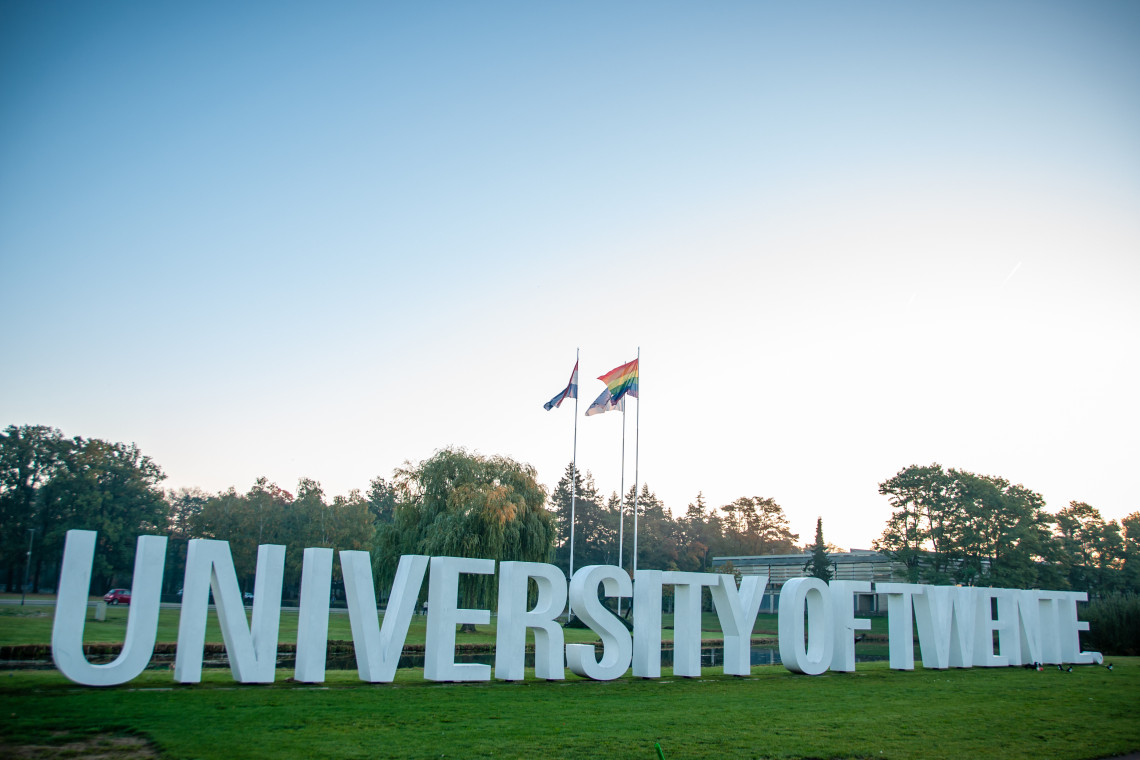
According to Mkatini, UT should follow Saxion’s example and permanently fly a Pride flag. ‘And I would love to see a rainbow crossing as well. That goes beyond mere symbolism: it sends a clear message that everyone is welcome here.’
There is also still room for improvement at policy level, Mkatini says. ‘Take the use of inclusive language in job vacancies, for example. Don’t use he/she, but choose a more inclusive alternative. Small changes like that can make a world of difference to the people concerned.’
Misgendering, deadnaming, and gender-neutral toilets
In his five years at UT, Kastelein himself has had few, if any, negative experiences at the university. ‘But I only came out in my second year, I look fairly conventional, and I don’t make a big deal of it. From non-binary and trans members of our community, you sometimes hear stories about misgendering and deadnaming (using someone’s old name after they have explicitly chosen a different name, ed.).’
He explains that it is not so much about accidentally using someone’s name or pronouns incorrectly. ‘That can happen. But if someone does it repeatedly, it can indicate that they are doing it deliberately and therefore do not accept the other person.’ He also hears complaints about the availability of gender-neutral toilets. ‘There are already quite a few of those toilets, but it seems they’ve simply replaced the signs on the women’s toilets. So now there are men’s toilets and gender-neutral toilets.’
He adds that outside the campus, confrontations can sometimes become physical or verbal. During a night out last year, members of Exaltio had eggs thrown at them. ‘People sometimes shout abuse at us as well.’
No specific UT figures
UT does not have specific figures on incidents. According to Mkatini, this is related to privacy and GDPR legislation. ‘It’s a small university. Descriptions of incidents could too easily be traced back to individuals within faculties or departments.’
According to Kastelein, UT has no official reporting point, while Exaltio has its own room at Saxion. Kastelein believes visibility is important. That is why he carries a rainbow-coloured keyring on his bag. He would also like the rainbow flag to have a permanent place on campus. ‘At Saxion, they have a dedicated flagpole for it. Surely that should be possible here too?’ At the same time, he realises that a flag in itself does not change anything. ‘But it shows support from the organisation, and that gives people courage.’
One way in which UT and Exaltio contribute to visibility is Pride Enschede, which will be held in Enschede from 2 to 11 October this year. On Monday, there will be a symposium at the Municipality of Enschede, organised by Saxion and UT. There will also be activities throughout the week, and Friday 2 October is Purple Friday.
Asked whether all those rainbow flags could be seen as forcing the issue on others, he has his answer ready. ‘There are many people who say it’s fine for us to be this way, as long as we keep it behind closed doors. But that isn’t real acceptance. If you just talk to us, you’ll realise we’re not scary people. Visibility leads to acceptance.’