

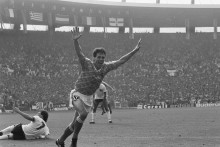
Van Basten’s feet were his most important tools in the 1980s and 1990s. Ultimately, the ankle of the 1988 European Championship hero became his Achilles’ heel. His ankle injuries brought the career of one of the world’s best footballers to an end. In 1995, he retired from professional football at the age of thirty. Now, more than thirty years later, his ankle is at the centre of the research project The State of the Cartilage (START).
Van Basten as a prime example
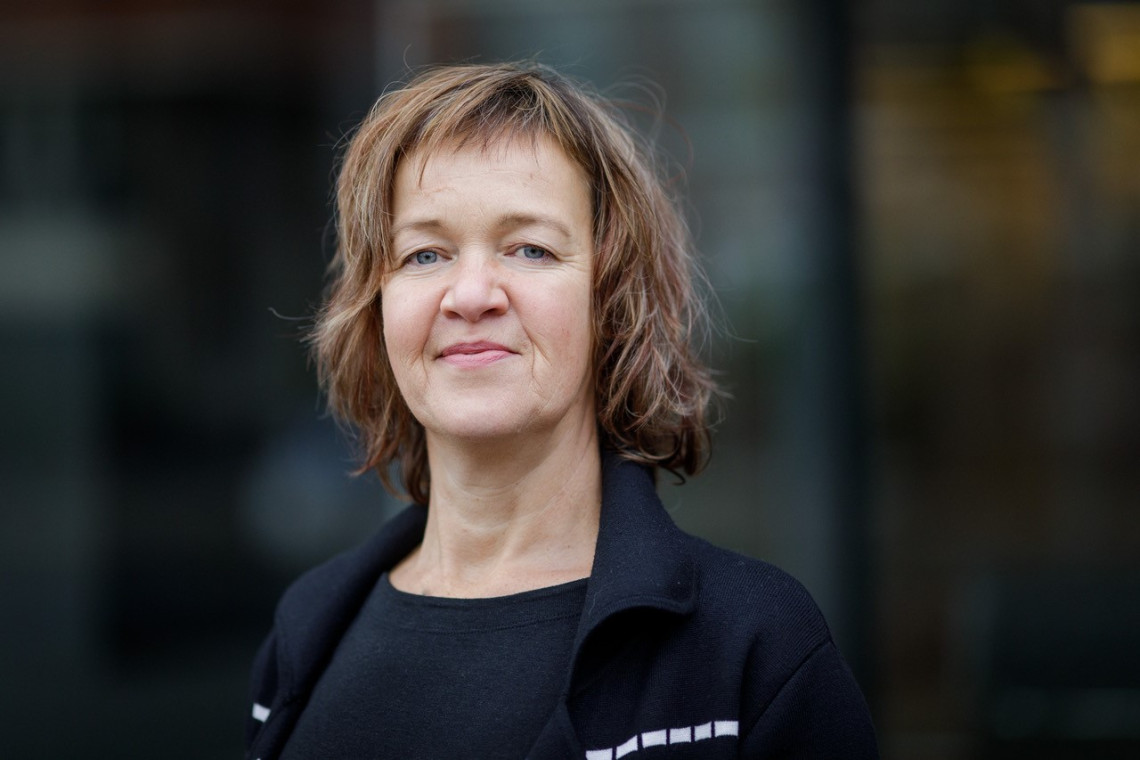
The Van Basten case shows how far-reaching the consequences of an ankle injury can be. His problems went beyond missing a match or undergoing a longer rehabilitation. After his career, he had his ankle joint fused because of severe pain and wear and tear. ‘Van Basten’s ankle injury is a compelling case’, says Gabriëlle Tuijthof, UT professor at the Faculty of Engineering Technology. ‘It led to the establishment of a world-renowned centre of expertise in Amsterdam specialising in the treatment of ankles. His injury was the reason our team started this research’, says Tuijthof.
The article continues below the photo. Marco van Basten in hospital for surgery on his ankle joint. Photographer: Bart Molendijk / Anefo.
UT and Amsterdam UMC are investigating how subtle cartilage damage resulting from ankle injuries in athletes can be detected more effectively and at an earlier stage. ‘Ultimately, our goal is to help future talents avoid experiencing the same ankle problems’, says Kaj Emanuel, assistant professor of orthopaedic surgery and sports medicine at Amsterdam UMC.
UT develops new ‘fibre’
The researchers are studying how cartilage damage can be detected earlier, long before it leads to osteoarthritis. ‘New materials are needed for that. The current equipment is not sufficient. We cannot detect damage in the cartilage in time. With the measuring equipment we are developing and putting into practice at Amsterdam UMC, we are making significant progress’, says Tuijthof. ‘We can look inside the joint. This is already done using a thin needle and a camera. But the ‘fibre’ is a new addition. It makes it possible to objectively map which types of damage and changes are present in the cartilage using light at different wavelengths.’
‘UT’s role is to combine the fibre with the endoscope and streamline the system’, says Tuijthof. ‘That will ultimately be the instrument we insert into the patient.’ A UT researcher is closely involved in this work and expects to complete a PhD on it in two and a half years.
The article continues below the photo. Marco van Basten leaves hospital on crutches. Photographer: Bart Molendijk/ Anefo.
The first design is now ready, as is the required documentation. ‘The application to actually start the research with patients has now been submitted’, says Tuijthof. ‘We expect to carry out the first measurements later this year.’
Future Van Bastens
‘Van Basten is the prime example of a young and healthy person whose ankle deteriorated so quickly that three years later, his football career was completely over’, says Emanuel. ‘With our instrument, we ultimately hope to treat osteoarthritis before the point of irreversible damage is reached.’
‘The Swan of Utrecht’, the nickname of former striker Marco van Basten, is aware of the project to which UT is contributing. ‘We know that Van Basten considers this research important. He hopes that future athletes will receive better help with serious injuries as a result’, says Tuijthof.