

‘Democracy is not a spectator sport, we have to take responsibility.’ Livia Firth believes that the fashion industry should not promote a new slave trade by employing people in poor conditions. Therefore she works together with leading fashion designers to make ethics part of fashion. Likewise, Tom Szaky of TerraCycle contributes to social causes by upcycling all types of waste imaginable - like cigarettes and dirty diapers – into plastic utensils. And Chipotle founder Steve Ells champions sustainable agriculture in his fast-food restaurants supplies.
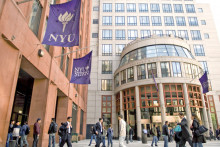
The conference on social entrepreneurship and change celebrated numerous leaders of change, defined as ‘visionary leaders who exemplify how creativity and innovation can solve environmental and social problems and drive profitability’. Don’t be fooled by the idea that major multinationals are suddenly run by philanthropists. It is a serious business opportunity. L’Oréal’s SVP Pamela Alabaster: ‘We use an inclusive business model in our sustainability approach. In plain English it means that there are about 1 billion people who are now poor and could become middle class. They are new customers and we want a share in that.’
The practitioner conference was preceded by a 2-day academic conference, where leading scientists debated on the very nature of social entrepreneurship, it’s drivers, facilitating factors and how social impact could be measured. Padmakumar Nair, Aard Groen, Juan Jauregui Becker, Laura Franco-Garcia and Raja Singaram, all part of the faculty of Management & Governance, presented their progress on these topics. For example, Jaurequi Becker, Franco-Garcia and Groen lead a project where students are connected to disadvantaged Mexican women, who want to gain independence by establishing a business. UT students help them to realize their dreams. This project combines industrial design, business development, incubation and sustainability and when successful, can be expanded to other contexts.
In short, the conference presented tremendous amounts of information from all angles. But what do the UT delegates take home? Jaurequi Becker: ‘For me, the network was most valuable. I was especially happy to meet Will Kennedy of the UN Office. He wants to know more about our Mexican project and is willing to assist us in finding funding.’ In addition to that, Franco-Garcia came to a different conclusion: ‘If we really want to make social change, famous people need to join. We need to make the topic sexy to create the necessary awareness.’ Aard Groen also sees other ways to create this awareness: ‘We have to make our students enthusiastic. Dell supports a social entrepreneurship competition, called the Dell Social Innovation Challenge. This could be a vehicle for our honours track university college students, where they receive true multidisciplinary, project-lead high-tech human touch education.’
Mariska Roersen