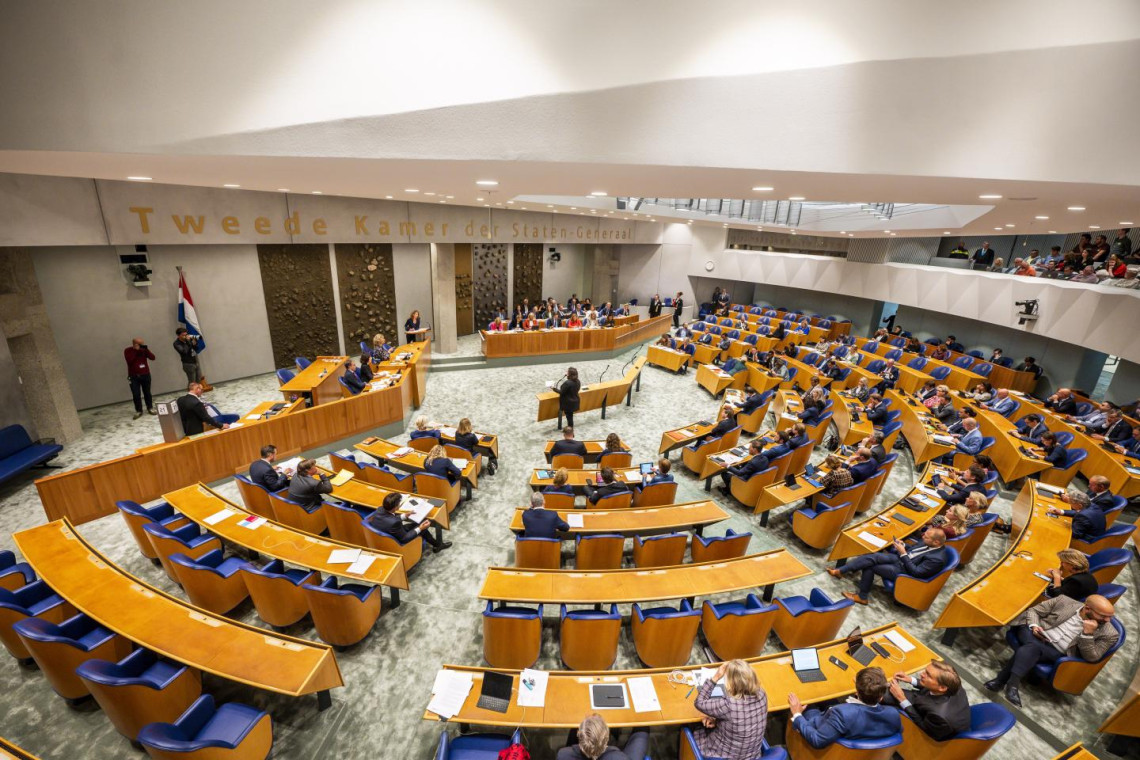



The 26-year-old Land Economist from Ghana and four international team members competed in the Cordaid Urban Challenge to find solutions to the problem of Solid Waste Management in Philippi, South Africa. The team’s original approach to organic recycling won them the honor of second runner up in the national competition and the award for the most professional report at the final last year in Den Haag.
‘There were many issues there,’ says Gavu. His team tackled the problem of increased generated waste that exceeded the capacity of the country’s landfills, where in the particular case of South Africa, three landfill sites had been closed, and the remaining three were quickly filling up, leaving the locals up to their ankles in litter.
‘Our focus was on creating an improved transport system for the collection of waste.’ Ideally, the team’s mission was to put the responsibility back into hands of local citizens to recycle their own organic waste. Over 50 percent of waste generated in South Africa is organic. ‘Instead of only collecting and selling to waste processors, people could process it themselves into meaningful products and create their own start-up businesses that generate revenue.’
The researcher graduated with a Masters in Science in March 2009 from the ITC Faculty for his study in the area of Urban Planning. He used graph theory measurements in an unconventional way to improve transport planning processes in Istanbul.
Invariably, his tastes in music lean to Handel’s Messiah and Haydn’s Creation. ‘I sing at the ITC Christian Fellowship services at the Dish Hotel,’ he explains, ‘and now I’m filling in as choir leader,’ a position he relishes in the companionship of many other ITC students. ‘I prefer to listen to classical music,’ he pauses, ‘because of my background. I sang in the choir at university during my bachelor’s time.’
Named after the Ghana’s first president, Kwame Nkrumah, Gavu earned a bachelor degree from the University of Science and Technology (KNUST) and was a teaching assistant for Junior High School students at the Saint Joseph’s Catholic Church which doubled as a school room, situated in the Ayeduasi community in Kumasi, Ghana.
 |
Helping others seems to be what drives Gavu, causing him sometimes a ‘sleepless night or two’. He thinks Cordaid organizers choose this year’s theme of bicycle taxis based on the success story in the Netherlands where cycling is a way of life and primary mode of transportation. ‘It’s not safe to ride a bicycle in Kenya and compete with the other traffic.’ He advises the newly formed teams to coordinate efforts to address the ‘real’ issues when mostly only ‘synthetic and unrealistic solutions’ are offered by aid organizations that don’t necessarily understand the complexity of the problems because they don’t participate in the local context.
Despite being far from home, the aroma of African food often fills his Stadsweide apartment. What kind of food does he like? ‘I like rice,’ says Emmanuel after giving it some thought. The clear voice of his roommate enters into the conversation, ‘Say Fufu!’, which makes Gavu laugh and explain that Fufu is a brand name for cassava meal made from root vegetables. He stands up to get a box from the kitchen. ‘This is it. It’s like a type of flour. The typical Ghanaian buys the root vegetable, peels it, pounds it, and grinds it themselves. You put a spicy soup with meat on top and then you’re done.’ he says while holding the box bought at the Chinese store.
As the interview closes, he says with a show of real Ghanaian hospitality, ‘But you didn’t eat any cookies. Go ahead. Please take some.’
 |
| Sage advice for Cordaid teams: ‘There are many “expat” solutions to problems, but in developing countries, some of these solutions will not work. You have to think in terms of the local context and conduct thorough research,’ says Gavu. (Photo: Gijs van Ouwerkerk) |
Cordaid Urban Challenge
Cordaid is one of the biggest international development organizations with a network of almost a thousand partners in 36 countries in Africa, Asia and Latin America. The organization has a strong support base in the Dutch community. At the end of November, ten student teams will present their solutions before a jury. The winning team will travel to Kisumu, Kenya, to implement their project. This year, 37 German and Dutch undergraduate students in the minor study ‘Sustainable Development in Developing Countries’ will focus their attention on developing non-motorized transport. Emmanuel Kofi Gavu will be one of the guest speakers at a presentation at the Ravelijn on 30 September from 3pm to 4:30pm.