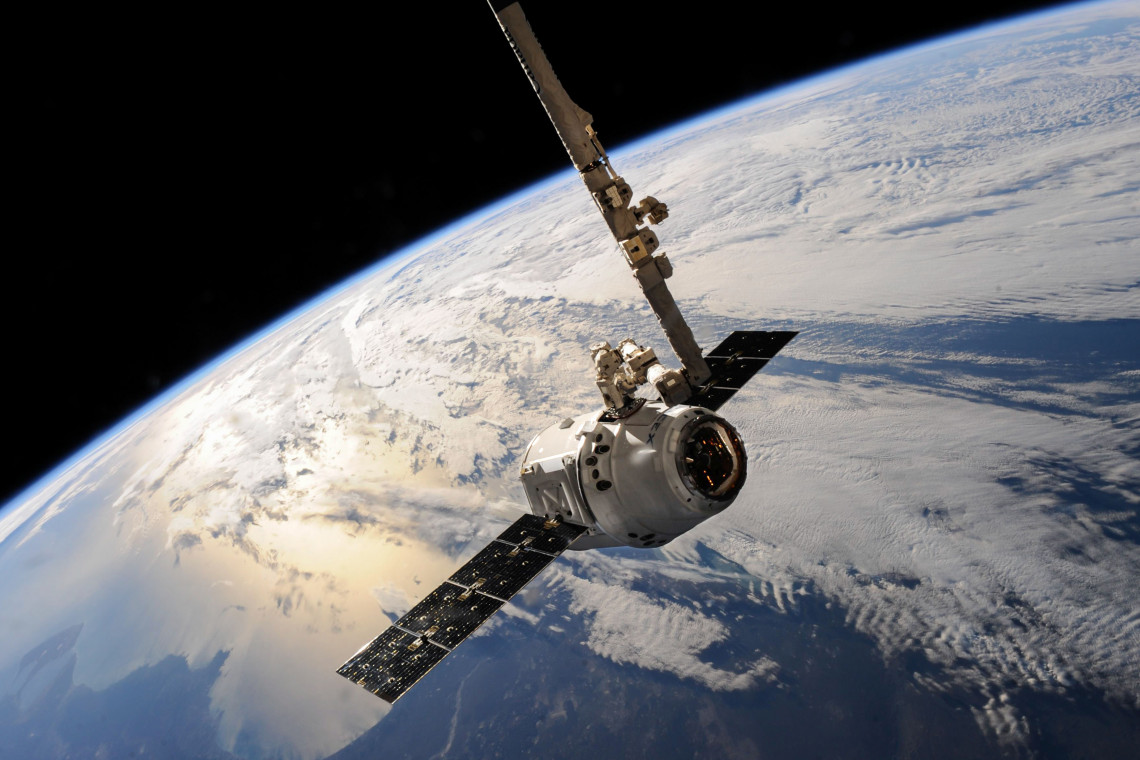



‘There are two types of satellites: those in high and low orbits,’ Hakvoort begins. ‘For the latter, you can think of Elon Musk’s Starlink satellites. These two types need to exchange information with each other and communicate with Earth. This used to be done using radio communications, but those wavelengths are becoming quite saturated. They interfere with each other. We are now looking for alternatives. One of them is optical communication. Laser beams, in other words.’
TikTok and defence
According to Hakvoort, laser beams transmit information in a highly targeted way at the speed of light. ‘They cannot be disrupted or intercepted. That can be useful both for keeping your TikTok videos streaming smoothly and for transmitting classified defence information.’
But that requires extremely precise targeting. The difficulty, Hakvoort explains, is that many satellites orbit the earth and disappear below the horizon. As a result, the angle at which transmitters on earth communicate with satellites, and satellites with each other, is constantly changing. ‘You want the laser beam to switch as quickly as possible to a satellite that is ‘rising’ above the horizon and then track that satellite as accurately as possible.’
Another challenge is the distance. ‘The longer the beam travels, the weaker the signal becomes. A laser beam that we transmit here as a tiny dot becomes a faint spot by the time it reaches a satellite.’
Atmosphere and radiation
On top of that, conditions in space are different from those on earth. ‘On earth, the atmosphere affects the signal, while with satellites in high orbits you have to deal with space radiation that damages components. We have to take into account a loss of power or precision. At the same time, you want the technology we ultimately develop to be reasonably compact. And you want to be able to control the signal as effectively as possible.’
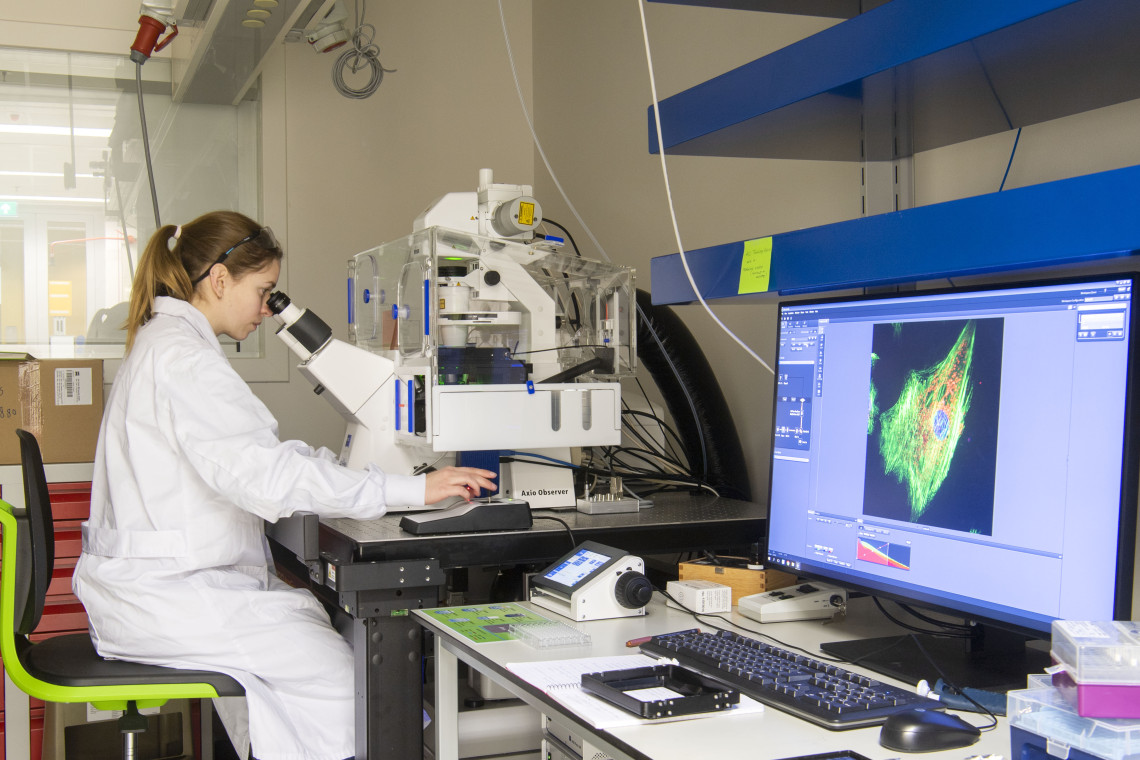
Hakvoort is quick to add a caveat, saying that the research is still in its infancy. ‘We still have to get started. And ultimately, I am a scientist: I want to develop the technology to the point where it can work in theory. At the same time, my group and the group at TU/e have a good reputation when it comes to validation, so we should at least be able to get the laser beam working in the lab.’
Alongside his work at the Faculty of ET, Hakvoort has an advisory role at Demcon Advanced Mechatronics. The company has a joint venture with VDL called FSO Instruments, which commercialises TNO’s technology.