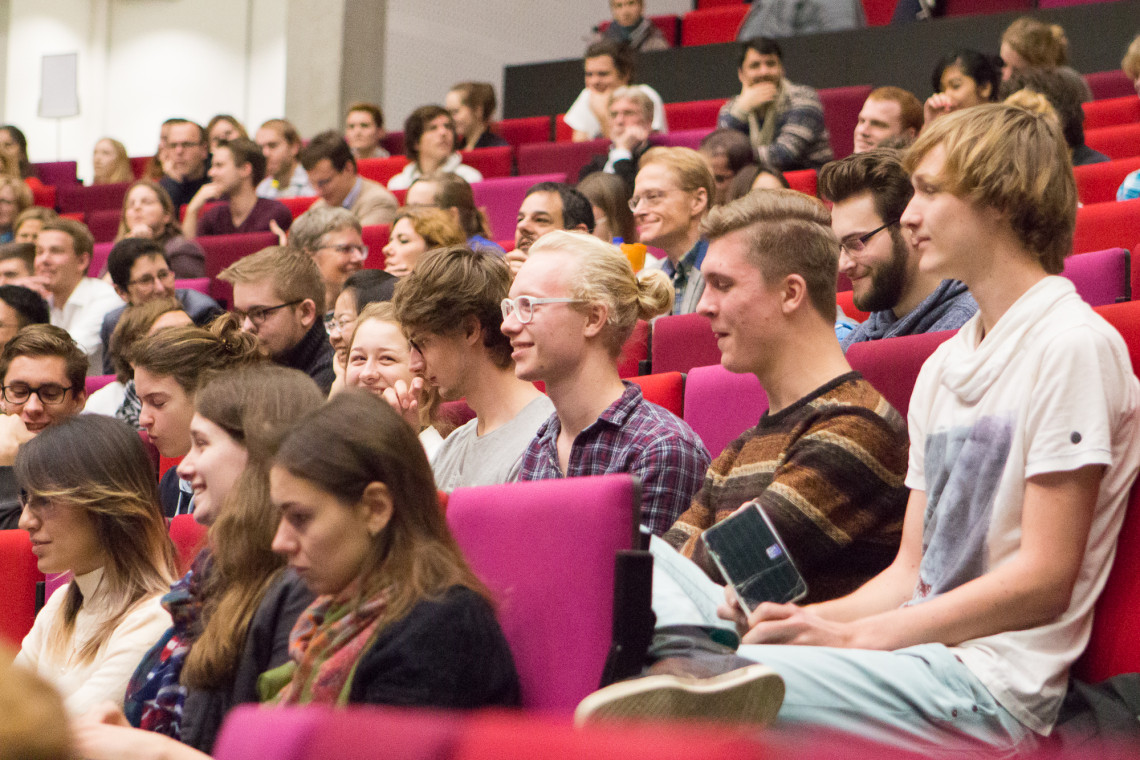



Last week on behalf of this newspaper, Newcom Research & Consultancy asked an on-line panel of 129 faculty members about their opinion of the educational climate at the UT. Almost half the respondents think the atmosphere is `certainly' (13 percent) or `somewhat' (35 percent) paternalistic. However, nearly a quarter of the respondents disagree. The teaching and research employees rate the UT's educational climate 6.6 on a scale of 10.
The primary cause for the high-school-like atmosphere is `the attitude of students,' according to 20 percent of polled employees. The government is the second culprit (named by 17 percent) because of financial punishments for study delays. Students also get too much structure forced upon them (according to 15 percent) and faculty members get less and less time to spend on their own research (say 10 percent of those questioned).
Employees who consider the academic practice at the UT too teacher-centered find that students `often' to `regularly' ask the teacher what exactly they have to review for an exam. Also, students `regularly,' `often' or `very often' assume that the teacher has the obligation to select all the information for them. `About seven years ago students had about 10 hours of required classes a week (apart from lab work),' one of the respondents remarked. `Nowadays it happens that they have to be present eight hours a day.'
Another interviewee observed, `Since the introduction of the Study Center almost all study discipline has been lost.' The Study Center is a didactic approach recently introduced in secondary schools that promotes the pursuit of knowledge rather than its transfer to students. But the fault also lies with the attitude of UT professors where student participation is concerned: `According to some (teachers), it's impossible, `one respondent noted.
Despite the decreasingly academic climate, most UT employees still enjoy coming to work. Asked to grade their job satisfaction, they come up with a generous 7.8.